AI for E-Commerce: Writing Product Descriptions at Scale
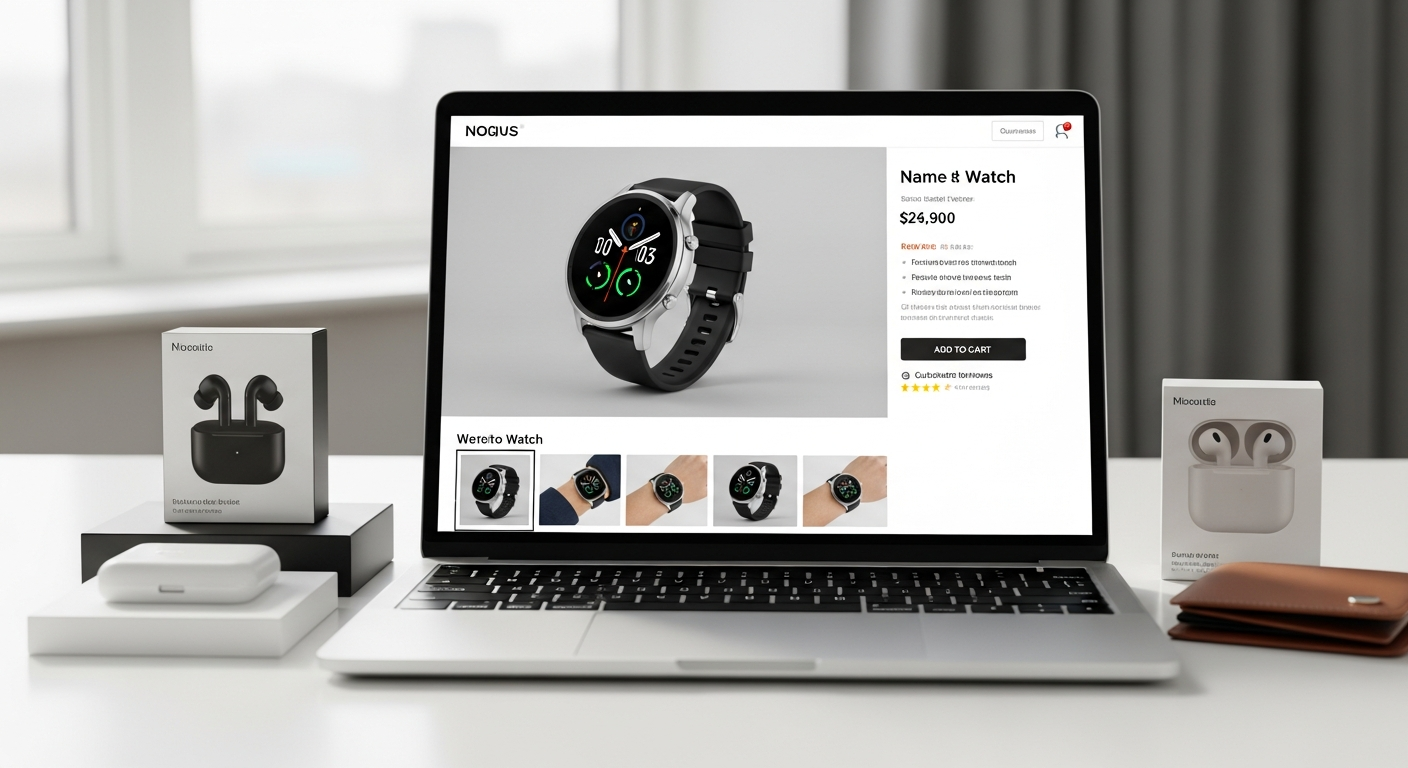
For any online store with more than a few hundred SKUs, product descriptions are a permanent bottleneck. Writing unique, persuasive, keyword-rich copy for every variant of every product is a task that overwhelms in-house teams and exhausts agency budgets. Generative AI has changed this economics entirely — turning a month-long copywriting project into an afternoon's work.
Why Unique Descriptions Matter More Than Ever
Google penalises duplicate content, and manufacturers' default descriptions appear on thousands of competing retailer sites simultaneously. When fifty retailers sell the same product with the same manufacturer-supplied description, none of them rank well for that product's search terms. The search engine cannot differentiate between them, and users receive the same generic information regardless of which link they click.
Unique product copy is therefore both a conversion driver and an SEO necessity. A distinctive description that answers the specific questions your target customer has — not just lists specifications — creates the differentiation that search engines reward with rankings and that customers reward with purchases. For stores with large catalogues, the only economically viable route to unique descriptions at scale is AI generation guided by structured product data.
Beyond SEO, unique descriptions build brand perception. A customer browsing multiple stores notices when one retailer clearly understands the product and its use cases while others simply paste manufacturer copy. That perception of expertise influences where they buy, even when prices are identical. AI-generated descriptions can be tailored to emphasise the knowledge and perspective your brand brings to each product category.
Feeding AI the Right Product Data
The quality of AI product descriptions is directly proportional to the quality of input data. Garbage in, garbage out remains the fundamental law. If you provide the AI with only a product name and price, it will invent specifications, make assumptions about use cases, and produce copy that may be factually wrong. If you provide comprehensive, structured data, the model becomes a formatting and persuasion engine rather than a guessing machine.
The ideal input for each product includes: product name, key specifications, materials or ingredients, primary use case, target customer persona, differentiating features versus competitors, and any compliance or safety information. A well-designed prompt template that ingests a product data row from a spreadsheet or PIM system produces publication-ready copy consistently, with minimal human review required.
- Product specifications: Dimensions, weight, materials, compatibility, power requirements
- Use case context: Who uses this product, in what situations, solving what problems
- Differentiators: What makes this product different from similar options
- Brand voice notes: Tone, vocabulary, phrases to use or avoid
- SEO keywords: Target search terms to incorporate naturally
Tone, Brand Voice, and Consistency
Consistency across thousands of AI-generated descriptions requires a brand voice definition embedded in the prompt. This includes: sentence length preferences, vocabulary level, whether to address the reader as "you" or describe the product in third person, how technical versus conversational to be, and any specific words or phrases to use or avoid. Build this voice definition once as a prompt prefix, and every description generated inherits the same tone.
This level of consistency is genuinely difficult to achieve even with a large human writing team. Human writers naturally vary in style, and maintaining a consistent voice across tens of thousands of products requires extensive style guides, training, and quality control. AI models follow instructions literally, producing the same stylistic approach whether generating description number one or description number ten thousand.
For e-commerce brands operating across multiple product categories, consider creating category-specific voice variants. A technical electronics retailer might use precise, specification-focused language for computer components while using warmer, lifestyle-oriented language for consumer audio products. The same AI system can switch between these voices based on product category tags in the input data.
Scaling from Hundreds to Thousands of Products
The operational workflow for AI product description generation at scale follows a clear pattern. First, export product data from your e-commerce platform or PIM system into a structured format — CSV works well. Second, design and test your prompt template on a sample of 20-30 products, iterating until output quality is consistently acceptable. Third, batch-process the full catalogue through the AI, typically at rates of hundreds of descriptions per hour.
Human review remains important but shifts from writing to quality control. A reviewer reading AI-generated descriptions can approve, flag for revision, or catch the occasional factual error far faster than they could write original copy. The review process becomes a check rather than a creation task, which is fundamentally more scalable. A single reviewer can process 200-300 AI-generated descriptions per day, compared to writing perhaps 20-30 original descriptions in the same time.
For new product additions, the same workflow handles ongoing updates. Products added to the catalogue weekly or monthly flow through the same prompt template, ensuring that new listings maintain the same quality and voice as the existing catalogue without requiring ongoing copywriter bandwidth.
SEO Optimisation Built Into the Process
Product descriptions are a primary driver of long-tail organic search traffic for e-commerce. Queries like "waterproof bluetooth speaker for shower" or "ergonomic mechanical keyboard for programming" represent high-intent searches that convert well — if your product pages rank for them. AI-generated descriptions can incorporate target keywords naturally, without the awkward keyword stuffing that human writers under SEO pressure sometimes produce.
The prompt template should include instructions for keyword integration: "Naturally incorporate the following search terms where contextually appropriate: [keyword list]." The model will weave these terms into the description in positions and frequencies that read naturally to humans while signalling relevance to search engines. This is a case where AI often outperforms human writers, who may over-optimise to the point of damaging readability.
For maximum SEO impact, generate not just product descriptions but also meta titles, meta descriptions, and structured data markup for each product. The same AI workflow can produce all four outputs from a single product data row, ensuring consistency and reducing the operational burden of comprehensive product page optimisation.
Measuring the Uplift
Brands that replace thin or duplicate product descriptions with AI-generated unique copy typically see a 15-30% improvement in organic ranking for long-tail product queries within three months. This traffic increase compounds over time as the full catalogue becomes optimised and as search engines develop stronger topical associations with your domain for those product categories.
Conversion rate improvements follow as customers find descriptions that address their specific questions rather than generic manufacturer copy. When a product description anticipates and answers the questions a buyer has — does it work with my existing equipment, is it suitable for my use case, how does it compare to alternatives — the customer moves to purchase with higher confidence and fewer support queries.
Both effects compound over time as the catalogue grows and organic coverage deepens. An e-commerce brand that begins AI-assisted description writing for its core 1,000 products, then extends to new additions and eventually rewrites legacy listings, builds a content moat that competitors relying on manufacturer copy cannot easily replicate. The economic advantage of AI content generation at scale is durable.
Ready to Create with Generative AI?
Join thousands of creators using Gen AI Last to generate text, images, audio, and video — all from one platform.
Start Writing Product Descriptions with Gen AI LastQuick Links
Start generating AI content today
Get Started Free