Generative AI for Video: Creating Marketing Videos Without a Camera
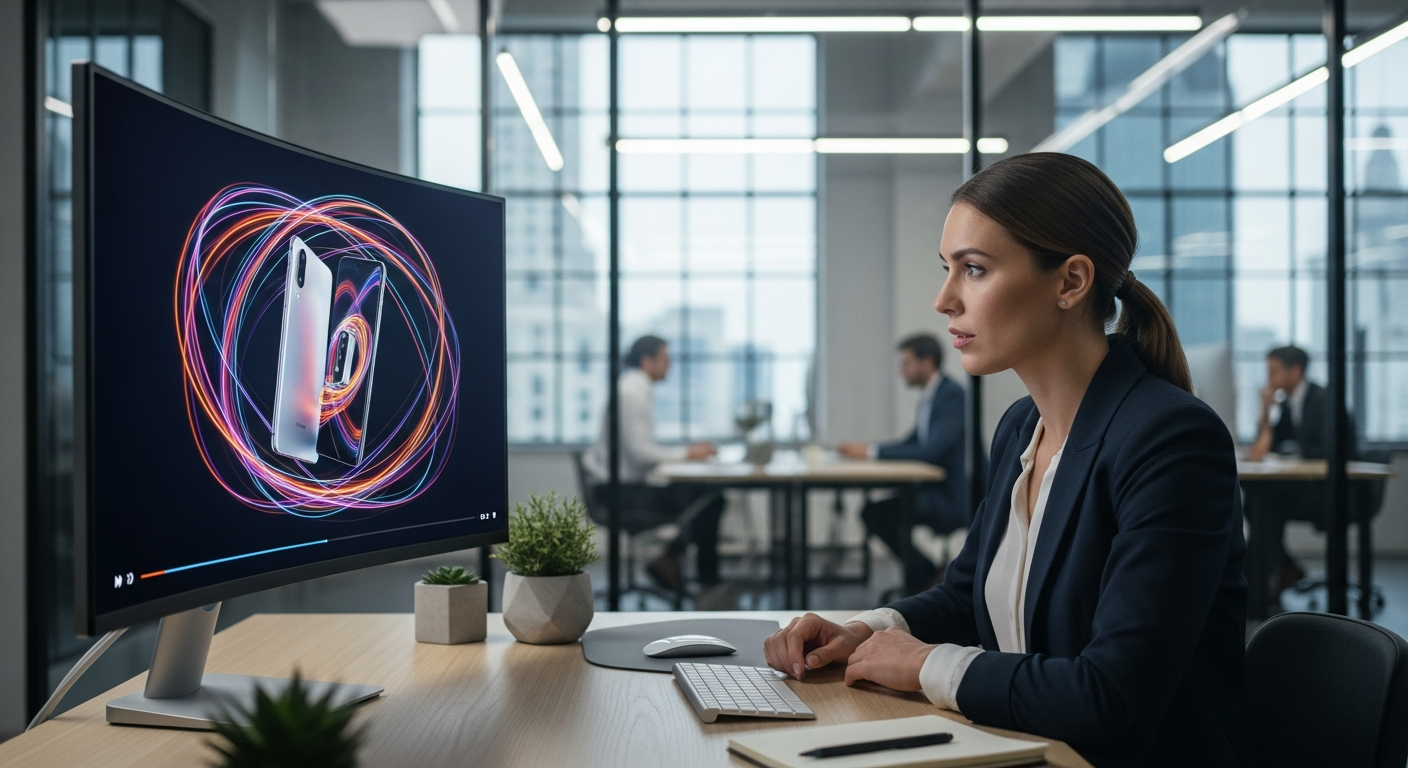
Video is the highest-converting content format on every major platform — but it has always been the most expensive to produce. Camera crews, studios, talent, editing, and post-production can turn a 60-second ad into a five-figure investment. Generative AI video changes this equation completely, making broadcast-quality video accessible to any team with a Wi-Fi connection.
Text-to-Video: How It Works
Modern video generation models — trained on millions of hours of footage — learn the relationship between textual descriptions and visual motion. Given a prompt like "aerial drone shot of a coastal city at golden hour, cinematic wide angle, slow dolly forward", the model synthesises frames that form a coherent, physically plausible video clip. The quality has improved so rapidly that 2026 outputs are routinely indistinguishable from stock footage at 1080p.
The underlying technology works through diffusion models that progressively refine noise into coherent video frames while maintaining temporal consistency. Each frame is generated aware of the frames before and after it, which is why modern AI video looks smooth rather than like a slideshow. The prompt provides semantic direction; the model handles the physics of light, motion, and depth that make video feel realistic.
For marketers, the technical details matter less than the practical implication: you can now describe a shot in plain English and receive production-quality video without ever touching a camera. This democratises video production in the same way that desktop publishing democratised print design in the 1990s — the barrier is no longer equipment or budget, but creative vision.
Use Cases That Deliver the Highest ROI
The strongest commercial applications for AI video today are concentrated in areas where video previously existed but was too expensive to scale. Product demonstration clips for e-commerce listings are a prime example — merchants know that video increases conversion rates by up to 30%, but shooting individual videos for thousands of SKUs was never economically viable. AI changes this calculus entirely.
Social media content is another high-ROI category. The platforms reward video heavily in their algorithms, but creating daily video content for Instagram, TikTok, and YouTube Shorts previously required either expensive production or time-intensive DIY filming. AI generates a week's worth of vertical video content in an afternoon, letting small teams maintain the posting frequency that algorithms demand.
- Product Demos: Showcase features without physical prototypes
- Social Reels: Platform-native vertical content at scale
- SaaS Onboarding: Visual walkthroughs for complex software
- Ad Creative Testing: Generate 20 variants, let data pick the winner
Aspect Ratios and Platform Optimisation
Different platforms demand different formats. YouTube favours 16:9 widescreen for long-form content; Instagram Reels, TikTok, and YouTube Shorts require 9:16 vertical video optimised for mobile viewing. LinkedIn video performs best at 1:1 square. AI video generators like Gen AI Last's movie creator let you specify the aspect ratio before generation so you receive platform-ready assets rather than having to reframe everything in post-production.
This flexibility has strategic implications. The same campaign concept can be generated in multiple aspect ratios simultaneously — horizontal for YouTube pre-roll, vertical for Instagram Stories, square for LinkedIn feed. Creating these variants manually would require reshooting or extensive cropping that often cuts important content. AI generates each version from scratch, optimising framing for each canvas size.
The workflow is straightforward: write a prompt describing the video concept, select the target aspect ratio (16:9, 9:16, or 1:1), and generate. Within minutes, you have platform-native video that meets the technical requirements of each distribution channel without any manual reformatting.
Building a Video-First Content Strategy
With production costs removed as a barrier, marketing teams can shift to video-first content strategies where video is the primary format rather than an occasional supplement. This matches user behaviour — video consistently outperforms static content on engagement metrics — but was impossible to execute without significant budget before AI.
A video-first approach means thinking about video from the content planning stage rather than asking "should we also make a video?" after the fact. Blog posts become video scripts. Product launches lead with video announcements. Customer success stories are captured as video testimonials. AI makes this approach operationally feasible for teams of any size.
The Human Role in AI Video Production
The creative director's job does not disappear with AI video — it evolves. Instead of coordinating logistics, the creative's energy goes entirely into concept, narrative direction, and brand coherence. You still decide what to say, in what order, and to whom. AI handles the execution. This is a fundamentally better use of creative talent and dramatically lowers the bar for experimentation.
The shift parallels what happened when photographers moved from film to digital. Technical constraints that once defined the craft (film costs, developing time, limited exposures) disappeared, and the profession evolved to focus more heavily on artistic vision and less on technical management. AI video is the same transition for videographers: the constraint is no longer production logistics but creative direction.
For marketing teams without dedicated creative staff, AI video removes the need for that expertise entirely at the execution layer. A marketer with a clear brief can generate professional video without any video production background. The human value remains in knowing what to say and why — the strategy that makes content effective regardless of the production method.
Ready to Create with Generative AI?
Join thousands of creators using Gen AI Last to generate text, images, audio, and video — all from one platform.
Create Your First AI VideoQuick Links
Start generating AI content today
Get Started Free