10 Ways AI Is Changing Digital Marketing in 2026
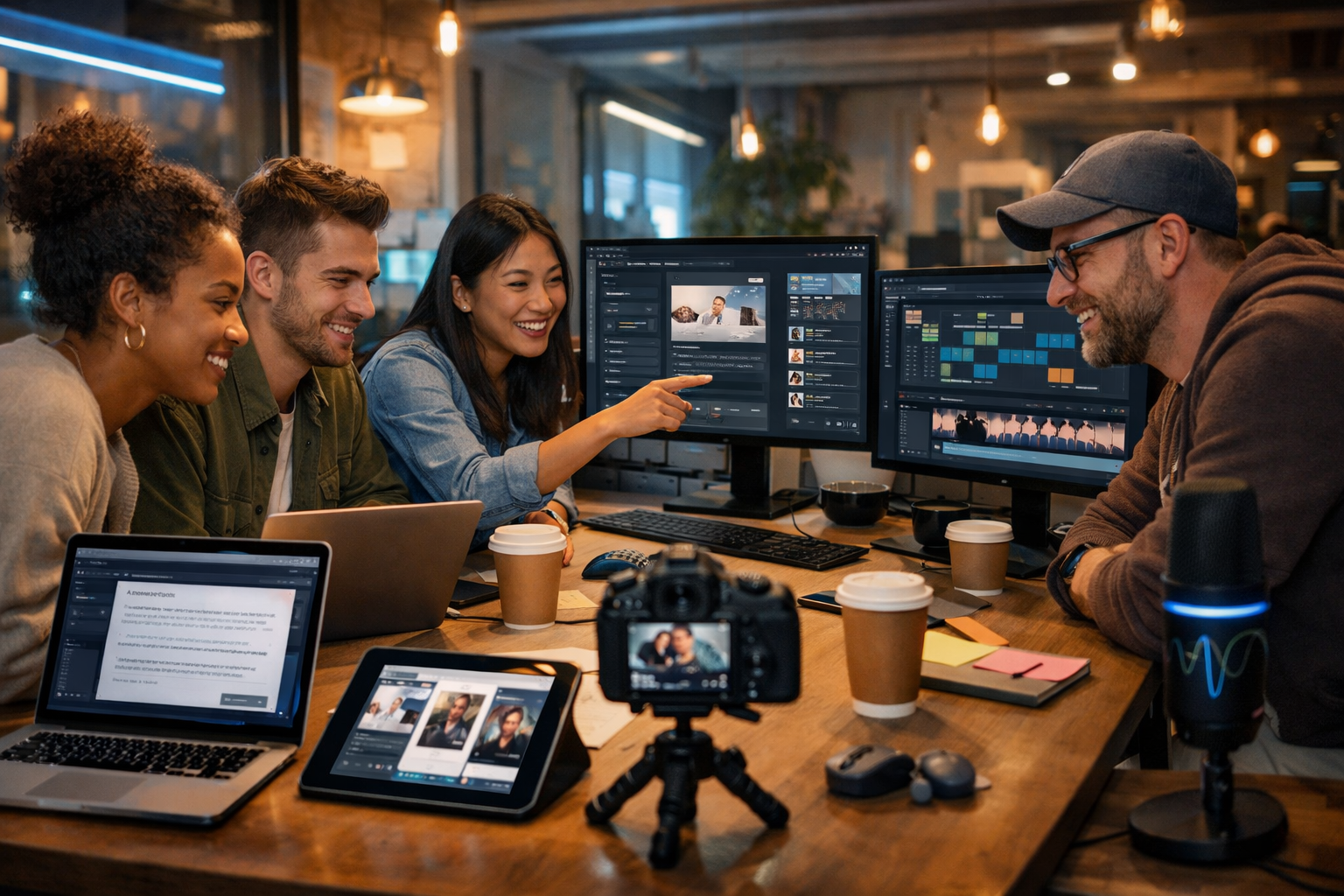
AI is no longer “nice to have” in marketing—it is the operating system behind faster creative production, smarter targeting, and better measurement. In 2026, the biggest shift is not that marketers use AI, but that AI is embedded into every workflow: from research and content to images, video, audio, optimisation, and reporting. Below are 10 ways AI is changing digital marketing in 2026, with practical examples and actions you can apply immediately.
1) Hyper-personalisation at scale (without manual segmentation)
In 2026, personalisation has moved beyond first-name tokens and broad segments. Brands are building dynamic journeys that adapt to intent signals (pages viewed, product comparisons, time-to-purchase, customer support interactions) and produce content variants automatically. The outcome: more relevant messaging and fewer “batch and blast” campaigns.
Practical example: A SaaS company delivers different onboarding emails based on the user’s chosen goal (reporting, collaboration, automation). Each email includes a tailored use case, a suggested feature path, and a short explainer video matched to the user’s role.
- Create 3–5 “intent clusters” (e.g., comparing, ready to buy, post-purchase, churn risk) and map one key message per cluster.
- Produce variant copy for email subject lines, landing page headlines, and CTAs using our AI content tools.
- Measure lift by cluster: conversion rate, click-through rate, and time-to-first-value.
2) Predictive creative testing replaces guesswork
A/B testing still matters, but AI is increasingly used to predict which creative combinations are likely to perform before spending heavily. Marketers are using AI to generate multiple angles (benefit-led, problem-led, social proof-led), then narrowing down to a short list for live testing.
Practical example: An e-commerce brand generates 20 ad variations: different hooks, different product shots, and different offers. It then tests only the best 4–6 variations, reducing wasted budget and speeding up learning cycles.
- Start with one product/service and write 10 hooks (pain, outcome, curiosity, myth-busting).
- Generate matching visuals (lifestyle, studio, UGC-style) using AI image generation.
- Run short tests (48–72 hours) and keep only winners for scaling.
3) Content velocity becomes a competitive advantage
In 2026, marketing teams win by shipping high-quality content consistently—across blog, email, social, and landing pages—without burning out. AI helps draft, repurpose, and localise content, while humans stay responsible for strategy, accuracy, and brand voice.
Practical example: One webinar becomes: a blog post, 6 LinkedIn posts, 10 short video clips, an email sequence, and a downloadable checklist—each adapted for the channel, not copy-pasted.
- Build a “content atomisation” workflow: pillar asset → derivatives → distribution calendar.
- Use AI text generation for first drafts (blogs, product descriptions, email campaigns, social copy), then edit for expertise and tone.
- Maintain a single source of truth for claims, stats, and product details.
4) Search shifts: AI Overviews, conversational queries, and intent-first SEO
SEO in 2026 is less about repeating keywords and more about demonstrating helpfulness, authority, and first-hand usefulness. With AI-assisted search experiences, users ask longer, more specific questions. Content that answers clearly, includes real examples, and covers related sub-questions is more likely to be surfaced.
Practical example: Instead of targeting only “email marketing software”, a brand publishes “How to set up a 7-day onboarding email sequence for B2B trials (with templates)” and includes templates, pitfalls, and metrics.
- Optimise for query patterns: “how do I…”, “best way to…”, “template for…”, “vs…”.
- Add scannable structure: clear headings, steps, examples, and FAQs.
- Refresh top pages quarterly with updated screenshots, benchmarks, and learnings.
5) AI-generated images reduce design bottlenecks (and increase iteration)
Design teams are no longer the limiting factor for producing campaign visuals. In 2026, marketers generate multiple visual directions quickly: social graphics, banners, concept product shots, and ad creatives. The best teams treat AI images as rapid prototypes and then refine for brand consistency.
Practical example: A startup runs a new offer and needs fresh creatives. Instead of waiting a week, it generates 12 image options in different styles (clean studio, lifestyle, bold gradients) and selects 3 to test.
- Create a mini “brand prompt guide”: preferred colour mood, composition, lighting, and do-not-use elements.
- Generate campaign-specific visuals with AI image generation, then add final touches in your design tool.
- Use consistent framing for ad sets (same aspect ratio, product position, and negative space for copy overlays).
6) Short-form video becomes easier to produce—and harder to fake
AI video tools in 2026 allow small teams to create reels, product demos, explainers, and ad variants quickly. At the same time, audiences are more sensitive to “uncanny” content. The winning approach is simple: use AI to accelerate production, but anchor videos in real product footage, clear narration, and credible claims.
Practical example: A DTC brand produces a 20-second product demo with AI-assisted editing and captions, paired with a genuine customer quote and real close-up shots.
- Keep a repeatable script structure: hook (0–2s) → problem → solution → proof → CTA.
- Generate multiple versions for different audiences (beginners vs power users) using AI video generation.
- Add compliance checks: avoid exaggerated “guarantees” unless substantiated.
7) Audio marketing expands: voice-overs, micro-podcasts, and sonic branding
Audio is becoming a practical marketing channel again. Brands are creating short podcast-style updates, narrated case studies, voice-overs for ads, and background music that fits their identity. AI audio generation makes this accessible for teams without a studio or voice talent budget.
Practical example: A consultancy turns its monthly insight report into a 6-minute narrated “boardroom briefing” and distributes it via email and LinkedIn.
- Repurpose one blog post per month into a 3–7 minute audio summary.
- Use AI audio generation for voice-overs and narration; keep pacing conversational and add short pauses.
- Standardise intro/outro music to build recognition over time.
8) Always-on customer support and pre-sales assistance improves conversion
AI-powered chat and assistants are reducing friction in the buying journey. In 2026, the most effective experiences combine automation with thoughtful escalation: AI handles common questions instantly, while humans step in for complex cases. Marketing benefits because fewer prospects bounce due to unanswered questions.
Practical example: On a pricing page, an assistant answers “Which plan is best for a 3-person team?” and suggests the best-fit plan, key features, and next steps—then offers a handover to sales if required.
- List the top 25 pre-sales questions from inboxes and sales calls; prioritise the top 10 for instant answers.
- Ensure answers match your latest pricing and policies; review monthly.
- Track impact: conversion rate, time on page, lead quality, and support ticket reduction.
9) Measurement improves with AI-driven insights (but data quality is everything)
As tracking becomes more privacy-conscious, marketers lean on modelling, aggregated reporting, and AI-assisted analysis to understand what is working. In 2026, teams that maintain clean event tracking and consistent campaign naming get far more value from AI insights than teams with messy data.
Practical example: A brand discovers that “how-to” content drives higher assisted conversions than direct sales pages. It adjusts budget: more educational content at the top, retargeting with product demos in the middle, and offer-led landing pages at the bottom.
- Audit your tracking: key events, attribution windows, and UTM consistency.
- Create a weekly insight routine: what grew, what dropped, what to test next.
- Use AI to summarise performance narratives for stakeholders (what happened, why it matters, what you’ll do).
10) Small teams compete with bigger brands through “all-in-one” AI production
The most noticeable 2026 change is operational: startups and small teams can now run multi-channel campaigns with professional-level assets. With an all-in-one platform, you can generate text, images, video, and audio from simple prompts and keep campaigns consistent without juggling multiple subscriptions.
Gen AI Last is designed for exactly this reality: one place to create blog posts, product descriptions, email campaigns, social copy, marketing visuals, product photos, banners, videos, demos, reels, explainers, voice-overs, background music, and narration—starting from $10/month.
- Build a campaign pack in one afternoon: landing page copy + 6 social posts + 3 creatives + 1 short video + voice-over.
- Keep tone consistent by reusing the same brand details in every prompt.
- Centralise production to reduce cost and coordination overhead—especially for lean teams.
A practical 2026 workflow: from idea to multi-channel campaign
If you want a simple system you can repeat weekly, use this workflow. It is designed to create assets quickly while keeping quality high.
- Define one outcome: lead, trial, demo booking, or purchase. Write it at the top of your brief.
- Pick one audience slice: role + problem + desired outcome (e.g., “marketing manager who needs more qualified leads without extra headcount”).
- Generate the core message: 3 angles and 10 hooks using our AI content tools.
- Create channel assets: blog + email + social, then generate 3–5 matching images and a 15–30 second video.
- Add audio where it helps: voice-over for the video and a short narrated version for accessibility.
- Launch and learn: test a small set of variations, track results, and iterate next week.
Prompt examples you can reuse
Below are ready-to-adapt prompts. Replace the bracketed sections with your details.
- Blog brief: “Write a 1,800-word SEO blog post targeting [keyword]. Include 10 actionable sections, examples for [industry], and a checklist. Use British English and avoid fluff.”
- Ad hooks: “Generate 15 paid social hooks for [product] aimed at [audience]. Mix pain-led, outcome-led, contrarian, and social-proof styles. Keep each under 12 words.”
- Image prompt base: “Create a photorealistic 16:9 marketing visual showing [scene] that highlights [product benefit]. Lighting: [warm/cool/neon]. No text or logos.”
- Video script: “Write a 20-second short-form video script for [offer]. Structure: hook, problem, solution, proof, CTA. Include on-screen shot list and voice-over.”
- Audio narration: “Turn this blog summary into a 60–90 second voice-over. Tone: confident, friendly, concise. Add natural pauses and a strong closing CTA.”
Common pitfalls to avoid in 2026
AI speeds everything up, including mistakes. Avoid these issues to protect performance and trust.
- Publishing unverified claims: treat AI outputs as drafts; verify facts, pricing, and compliance language.
- Same content everywhere: repurpose, but adapt. Each channel has different norms and attention spans.
- Ignoring brand consistency: create a short voice-and-tone guide and reuse it in prompts.
- Over-automation: keep human review for sensitive topics, promises, and customer-facing support journeys.
Getting started with Gen AI Last
If you want to apply these 10 changes without adding complexity, use one platform that covers the full production cycle: text, images, video, and audio. Gen AI Last gives you full access across all features on every plan, making it realistic for startups and small teams to produce professional marketing assets consistently.
Explore view pricing from $10/month or start creating for free and build your first multi-channel campaign pack today.
Ready to Create with Generative AI?
Join thousands of creators using Gen AI Last to generate text, images, audio, and video — all from one platform. Start your 7-day free trial today.
Start Free — Try 7 DaysQuick Links
Create AI content from $10/month
View Plans