10 Ways AI Is Changing Digital Marketing in 2026
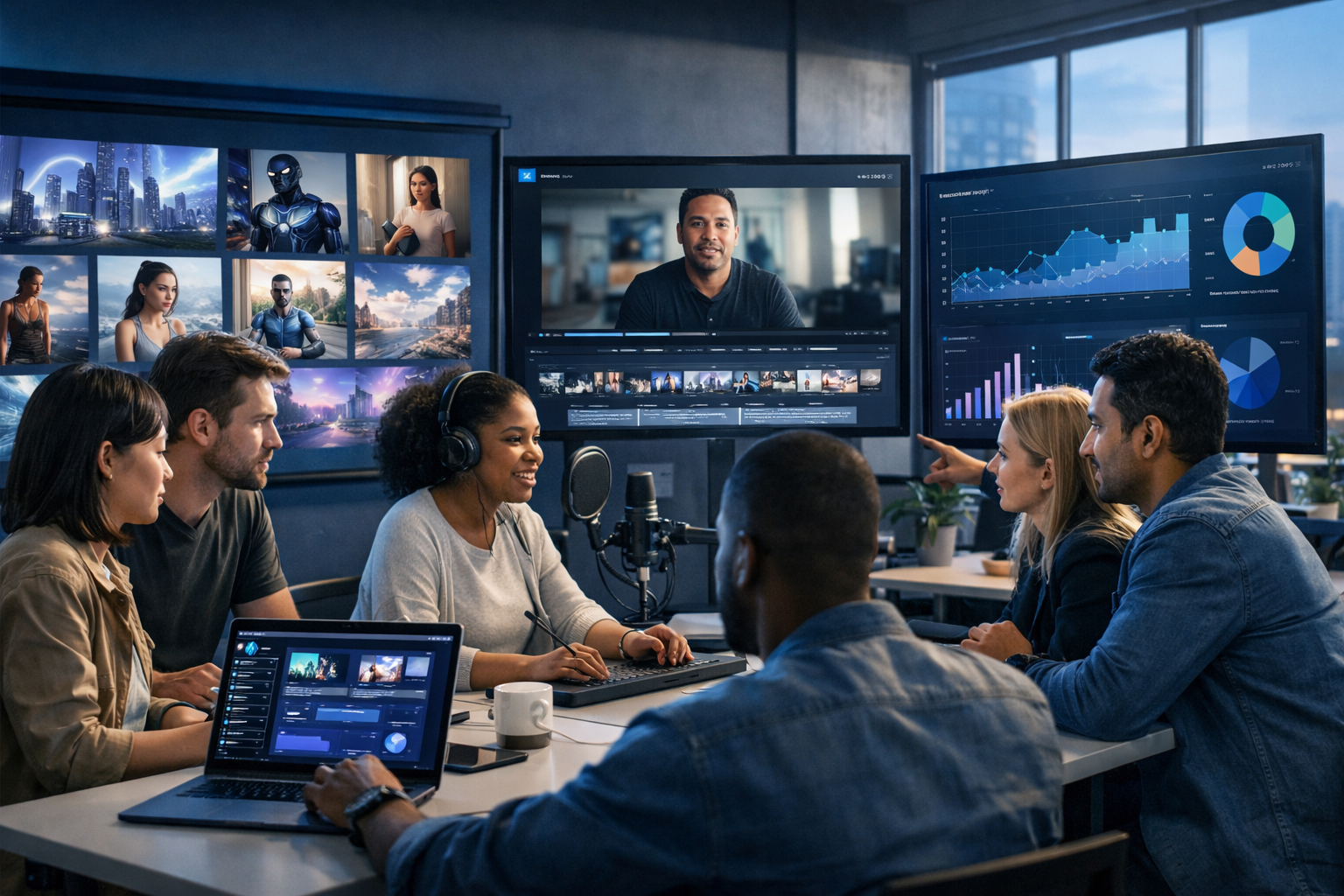
Artificial intelligence is no longer a futuristic add-on to digital marketing — it is the engine driving it. In 2026, AI is transforming how businesses attract, convert and retain customers, from automated content creation to predictive analytics and hyper-personalised campaigns. Whether you are a startup founder, marketing manager or solo creator, understanding these shifts is essential to staying competitive.
Below, we explore 10 ways AI is changing digital marketing in 2026 — and how businesses of all sizes can use these advancements strategically and affordably.
1. Hyper-Personalisation at Scale
Generic marketing messages are disappearing. In 2026, AI analyses behavioural data, browsing history, purchase patterns and engagement signals in real time to deliver highly personalised content to each individual.
Instead of segmenting audiences into broad categories, AI now enables “segments of one”. This means:
- Dynamic email content tailored to individual preferences
- Product recommendations that adapt instantly
- Landing pages that change based on user behaviour
With AI-powered text generation tools like our AI content tools, marketers can create personalised email sequences, product descriptions and ad copy in minutes rather than days.
2. AI-Generated Content Becomes the Norm
In 2026, AI content creation is no longer experimental — it is standard practice. Businesses use AI to generate:
- SEO blog posts
- Social media captions
- Ad creatives
- Product descriptions at scale
The key shift is quality. AI now produces structured, well-researched and conversion-focused content that rivals manual writing when guided by clear prompts. Small teams can compete with larger agencies because production speed is no longer a bottleneck.
3. Predictive Analytics Drives Decision-Making
Rather than reacting to past performance, marketers in 2026 use AI to predict future outcomes. Predictive analytics models forecast:
- Which leads are most likely to convert
- Which customers may churn
- Optimal times to launch campaigns
This reduces wasted ad spend and improves ROI. For example, an e-commerce brand can automatically increase bids for high-conversion users while reducing spend on low-intent traffic.
4. AI-Powered Image Creation Transforms Visual Marketing
Visual content dominates digital channels. In 2026, AI-generated imagery allows brands to create:
- Product mock-ups without photography studios
- Custom social media graphics
- Ad banners tailored to audience segments
Instead of costly photoshoots, marketers can produce photorealistic visuals on demand. This is particularly valuable for startups and small businesses working with limited budgets. By combining AI text and image tools, brands maintain visual consistency while accelerating campaign production.
5. Automated Video Marketing at Scale
Video remains the highest-converting content format in 2026 — but production used to be expensive and time-consuming. AI has changed that.
Now, marketers can generate:
- Product demo videos from text scripts
- Explainer animations
- Short-form social reels
- Personalised video emails
AI handles scene transitions, subtitles, voice-overs and pacing automatically. Businesses that previously avoided video due to cost are now producing consistent video content weekly.
6. Conversational AI Replaces Static Customer Journeys
Chatbots in 2026 are no longer scripted FAQ responders. They are intelligent conversational assistants that:
- Guide users through purchasing decisions
- Recommend products in real time
- Handle objections with contextual responses
AI-powered conversations reduce friction and improve conversion rates. Instead of navigating multiple pages, customers receive immediate, personalised assistance.
7. Smarter Ad Targeting and Budget Optimisation
AI is revolutionising paid advertising. Algorithms continuously analyse campaign performance, reallocating budgets based on real-time data.
Key changes in 2026 include:
- Automatic audience refinement
- Creative testing without manual input
- Dynamic bidding strategies
Marketers now focus on strategy while AI handles optimisation. This levels the playing field for smaller brands competing with enterprise advertisers.
8. Voice and Audio Marketing Expands Rapidly
With the growth of voice assistants and audio platforms, AI-generated audio is becoming central to marketing strategies. Brands are producing:
- Podcast episodes
- Voice-over ads
- Audiobook-style lead magnets
- AI-narrated training content
AI audio tools allow businesses to create professional narration without hiring voice actors or booking studios. This significantly lowers production costs while maintaining quality.
9. Real-Time Content Adaptation
In 2026, content is no longer static after publication. AI continuously analyses engagement metrics and adjusts headlines, visuals and calls to action automatically.
For example:
- Email subject lines are optimised based on open rates
- Landing page headlines shift based on visitor source
- Social captions are refined for higher engagement
This continuous optimisation increases performance without constant manual intervention.
10. Affordable AI Levels the Playing Field
Perhaps the most important change is accessibility. In previous years, advanced AI tools were expensive and complex. In 2026, platforms like Gen AI Last make AI-powered marketing available from just £10 per month.
With full access to text, image, video and audio generation, small teams can:
- Launch complete campaigns without outsourcing
- Test multiple creative variations quickly
- Scale content production efficiently
You can view pricing from $10/month and see how affordable full AI capability has become.
How to Adapt Your Marketing Strategy in 2026
Understanding the changes is only the first step. To remain competitive, businesses should:
- Invest in AI literacy: Ensure your team understands how to use AI tools effectively.
- Combine human creativity with AI efficiency: AI accelerates production, but strategy and brand voice still require human oversight.
- Focus on data quality: AI outputs are only as strong as the data guiding them.
- Test continuously: Use AI to run experiments across channels and optimise based on results.
If you are ready to integrate AI into your workflow, you can start creating for free and explore how text, image, video and audio tools work together in a single platform.
The Future Beyond 2026
AI will continue evolving, but the core principle remains clear: marketing success now depends on speed, personalisation and intelligent automation. Businesses that embrace AI thoughtfully will outpace competitors still relying on manual processes.
The good news is that adopting AI no longer requires enterprise budgets or technical teams. With accessible platforms offering comprehensive capabilities under one roof, companies of any size can participate in this transformation.
AI is not replacing marketers — it is amplifying them. In 2026, the brands that thrive are those that use AI strategically, ethically and creatively to deliver genuine value to their audiences.
Ready to Create with Generative AI?
Join thousands of creators using Gen AI Last to generate text, images, audio, and video — all from one platform. Start your 7-day free trial today.
Start Free — Try 7 DaysQuick Links
Create AI content from $10/month
View Plans