AI Content for Fitness Coaches and Personal Trainers (2026)
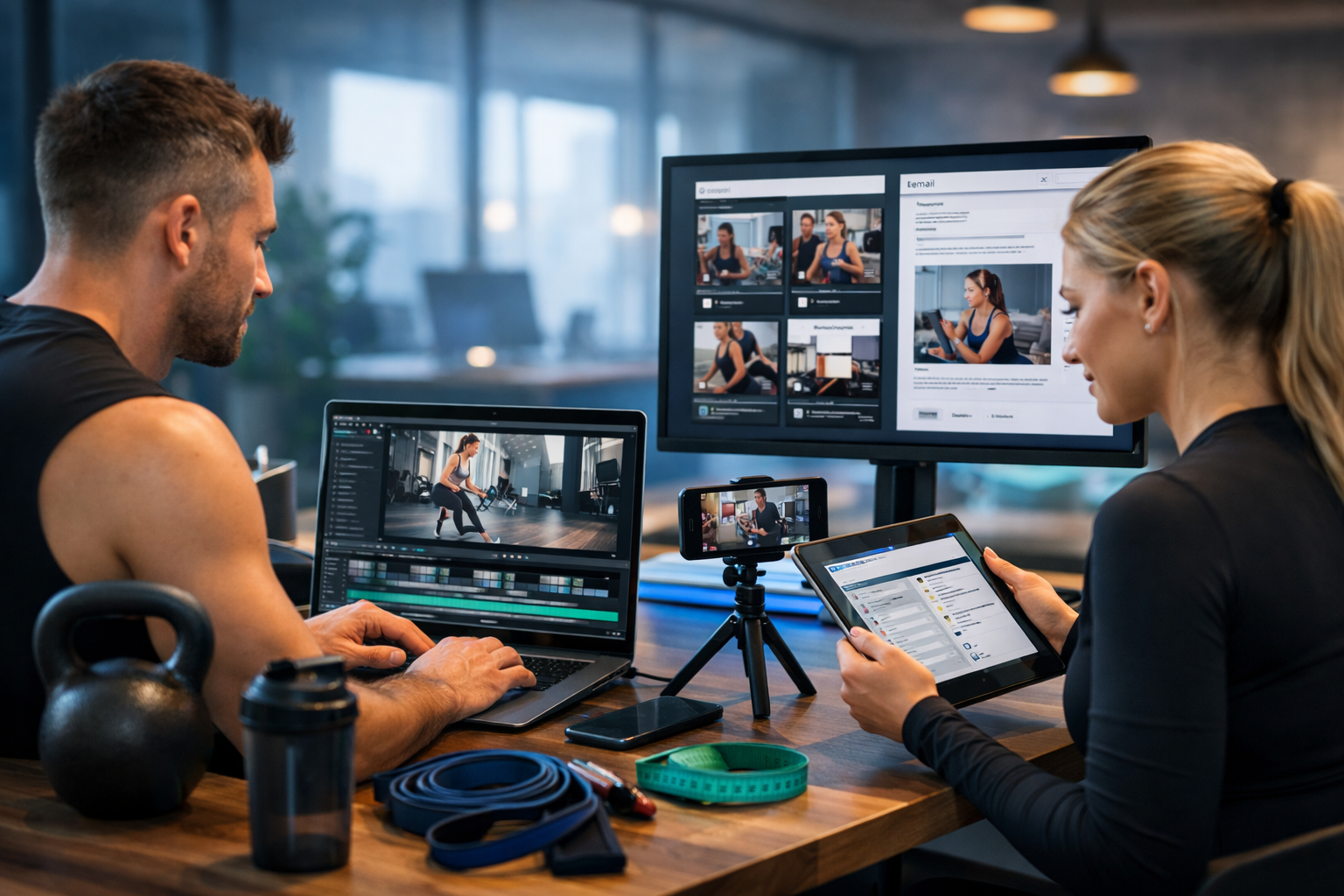
AI content for fitness coaches and personal trainers is no longer just about writing faster captions. Done well, it becomes a repeatable system that turns your training expertise into consistent posts, lead magnets, emails, reels, client resources, and even voice-overs—without sacrificing your tone, ethics, or results. This guide shows exactly what to create, how to structure it, and how to use Gen AI Last to produce professional text, images, video, and audio from simple prompts.
Why AI content matters for fitness coaches and personal trainers
Most coaches lose clients (and leads) for one simple reason: inconsistency. You might deliver great sessions, but marketing happens in the gaps between sessions—on Instagram, YouTube, email, and your website. AI helps you stay consistent by speeding up production while keeping messaging aligned with your coaching method.
The goal isn’t to “automate authenticity”. The goal is to turn your real coaching experience—client wins, common mistakes, progressions, cues, mindset coaching—into helpful content at a sustainable pace.
What AI can (and can’t) do in fitness marketing
- AI can draft content frameworks, scripts, email sequences, and reusable templates.
- AI can repurpose one idea into a blog post, carousel, reel script, and newsletter.
- AI can generate consistent visuals, B-roll style clips, and voice-overs for short-form videos.
- AI can’t replace your judgement on safety, form, injury considerations, and scope of practice.
- AI can’t ethically promise results or give medical advice—your content must include appropriate disclaimers.
A simple content engine: one message, four formats
If you’re juggling clients, admin, programming, and your own training, you need a content engine. A reliable structure is:
- One weekly core message (e.g., “progressive overload without pain”).
- One long-form asset (blog or YouTube-style script).
- 3–5 short-form assets (reels, carousels, stories).
- One conversion asset (lead magnet + email follow-up).
Gen AI Last is built for this approach because you can create the text, the supporting visuals, the video, and the audio in one place using our AI content tools—ideal for solo trainers and small studios.
What to create: high-impact AI content ideas that actually bring clients
Not all content performs. Fitness audiences respond best to clarity, specificity, and coaching cues they can use immediately. Here are content types that consistently drive leads and trust.
1) “Fix your form” micro-coaching posts
These are short posts or carousels that target one common error and one fix. Example topics: squat depth and bracing, deadlift setup, push-up progression, shoulder positioning in pressing.
- Hook: “If your squats hurt your knees, check this first.”
- Why it happens: 1–2 lines of explanation.
- Fix: 2 cues + a drill.
- CTA: “DM ‘SQUAT’ for my 5-minute warm-up.”
2) Programme previews and “why this works” breakdowns
Instead of generic “leg day” posts, explain your programming logic. This positions you as a professional (E-E-A-T) and reduces price objections.
- Exercise selection: why this variation suits your audience
- Progression: what changes week-to-week
- Intensity: RPE/RIR guidance in plain English
- Recovery: the minimum effective dose for busy people
3) Lead magnets that match your offer
Your freebie should pre-qualify prospects for what you sell. Examples:
- Online PT: “7-day strength starter plan (30 minutes)”
- Fat loss: “High-protein snack list + portions”
- Mobility: “10-minute desk stiffness reset”
- Postnatal (within scope): “Core re-connection basics and red flags”
How to use Gen AI Last to produce text, images, video, and audio
Gen AI Last is an all-in-one platform, which matters when you’re trying to ship content weekly. You can generate copy, create matching visuals, produce short videos, and add voice-overs without bouncing between multiple subscriptions. And because all plans include full access, you can start lean and scale—view pricing from $10/month.
Step 1: Create a brand voice “mini brief” (use it every time)
Before generating anything, define your voice so AI output stays consistent. Save this as a reusable prompt snippet:
- Audience: e.g., busy professionals 30–45, beginners to intermediate
- Positioning: evidence-based strength + sustainable habits
- Tone: direct, friendly, no hype, no shaming
- Rules: no medical claims; include safety disclaimers for form/injury topics
- CTA style: low-pressure (“Reply ‘PLAN’ and I’ll send…”)
Step 2: Generate your weekly long-form anchor (blog or newsletter)
Long-form content builds authority and fuels repurposing. Use AI Text Generation to draft a structured article, then add your coaching details (client patterns, cueing language, your preferred progressions).
Prompt example (copy/paste and edit):
“Write a 1,500-word blog post for fitness clients about ‘progressive overload for beginners without getting injured’. Use British English. Include: 5 common mistakes, weekly progression examples for squat/hinge/push/pull, a simple warm-up template, and a disclaimer to consult a professional for pain/injury. Keep the tone supportive and evidence-based. End with a CTA to book a consultation.”
Step 3: Repurpose into social posts (captions, carousels, scripts)
From your anchor piece, generate:
- 3 reels scripts (15–30 seconds): hook → 2 cues → CTA
- 1 carousel: 7 slides (problem, why, fix, demo drill, common errors, weekly plan, CTA)
- 5 story prompts: polls, quizzes, “this or that”, client FAQ
- 1 LinkedIn post if you target corporate or executive clients
Step 4: Generate on-brand visuals and social graphics
Use AI Image Generation for consistent graphics: workout plan covers, carousel backgrounds, YouTube thumbnails, lead magnet mock-ups, or simple “cue cards” that match your brand colours.
- Create a repeatable template style: same lighting, same framing, same palette.
- Avoid unrealistic bodies and misleading “before/after” implications.
- Use images to clarify: movement phases, set-up positions, equipment alternatives.
Step 5: Create short videos and voice-overs (without a full studio)
Short-form video is often where coaches get stuck: scripting, filming, editing, captions. Gen AI Last helps by generating video assets and audio elements you can layer onto your footage or slides.
- AI Video Generation: create explainer clips, social reels, and simple demos from your script.
- AI Audio Generation: produce voice-overs for technique breakdowns, plus background music for reels.
Tip: If you’re camera-shy, start with a slide-based reel: 6–8 slides + a calm voice-over explaining the cues. It still converts because it’s useful.
Ready-to-use prompt packs for fitness coaches (copy/paste)
Use these prompts in Gen AI Last and keep your brand mini-brief at the top of each request.
Prompt pack A: 30-day content calendar (by goal)
“Create a 30-day content calendar for a [online personal trainer / gym-based coach] targeting [goal: fat loss / strength / mobility] for [audience]. Include: 12 reels ideas with hooks, 8 carousel topics with slide outlines, 6 story sequences with polls, 4 email newsletter topics. Add CTAs that lead to a free consult. Keep claims realistic and avoid medical advice.”
Prompt pack B: Reels scripts that teach one cue
“Write 5 short-form video scripts (20–30 seconds) for [exercise]. Each script must include: a bold hook, one common mistake, 2 coaching cues, one simple regression, and a CTA to download my free [lead magnet]. Use punchy sentences and stage directions (what to show on screen).”
Prompt pack C: Email sequence that sells without pressure
“Write a 7-email sequence for new subscribers who downloaded [lead magnet]. Audience: [who]. Offer: [your coaching package]. Include: welcome, quick win, myth-busting, case study (ethical, anonymised), objection handling, FAQ, soft close. Add subject lines and preview text. British English.”
Prompt pack D: Client onboarding kit (saves hours)
“Create a client onboarding kit for my personal training service. Include: welcome email, expectations and communication policy, weekly check-in form questions, habit tracker template, and a ‘how to film exercise form videos’ guide. Keep it concise, friendly, and professional.”
Compliance, safety, and trust: fitness-specific AI guidelines
Fitness content sits close to health. To build trust (and protect your business), apply these rules:
- Stay in scope: don’t diagnose injuries or prescribe treatment. Encourage professional assessment where needed.
- Use careful language: avoid “guaranteed”, “melt fat”, “detox”, or extreme promises.
- Add safety lines: “If you feel sharp pain, stop and seek advice.”
- Be transparent with case studies: anonymise details and clarify that results vary.
- Check AI output: confirm cues, set/rep schemes, and progression logic before publishing.
A weekly workflow you can actually stick to (90 minutes)
Here’s a realistic weekly cadence for a busy coach.
- 10 mins: pick one client-inspired topic (what you coached most this week).
- 25 mins: generate the long-form draft + edit with your cues and disclaimers.
- 25 mins: generate 3 reels scripts + 1 carousel outline from the long-form piece.
- 20 mins: create 3–5 matching visuals (cover, carousel backgrounds, thumbnail).
- 10 mins: generate a voice-over or short audio hook; export and schedule.
If you want to test this workflow without committing to multiple tools, you can start creating for free and then scale into a plan when you’re ready.
Examples: one topic turned into a full content set
Topic: “How to build pull-ups when you can’t do one yet.”
- Blog/email anchor: progressions, weekly plan, common mistakes, grip tips.
- Reel 1: “Stop doing banded pull-ups like this” + better lat engagement cue.
- Reel 2: 3-step progression: hangs → scap pulls → eccentrics.
- Carousel: “Your first pull-up in 6 steps” (with regressions).
- Lead magnet: “4-week pull-up builder (2 days/week)” PDF.
- Voice-over: calm coaching narration over demo clips.
Common mistakes when using AI content in the fitness industry
- Posting generic advice: “Eat less, move more” doesn’t differentiate you. Add specifics: portions, routines, progressions.
- Overproducing without offers: every week should include one clear next step (consult, programme, trial session).
- Ignoring your local market: location-based content (gym area, timetable, community) helps in-person PTs convert.
- Not capturing FAQs: your DMs are a content goldmine—turn questions into scripts and posts.
- Forgetting retention: create content for current clients too (check-in reminders, technique refreshers, mindset pieces).
Build your AI content stack on a small budget
Many trainers pay separately for a copy tool, a design tool, a video tool, and an audio tool. Gen AI Last keeps it simple: one platform for text, images, video, and audio—with plans that include full access. If you’re building a lean coaching business, that pricing structure matters.
Explore our AI content tools to generate your next blog, create scroll-stopping social graphics, produce a short explainer video, and add a voice-over that sounds polished—without expanding your tech stack.
Conclusion: make AI your assistant, not your identity
The best AI content for fitness coaches and personal trainers is built around real coaching: the cues you repeat, the mistakes you see daily, and the small habit changes that drive results. Use AI to speed up drafting and production, then layer in your professional judgement and client-first ethics.
If you want an all-in-one way to create text, images, video, and audio from simple prompts, view pricing from $10/month and start building a weekly content engine you can actually maintain.
Ready to Create with Generative AI?
Join thousands of creators using Gen AI Last to generate text, images, audio, and video — all from one platform. Start your 7-day free trial today.
Start Free — Try 7 DaysQuick Links
Create AI content from $10/month
View Plans