AI Content for Travel and Hospitality Brands: A Practical Guide
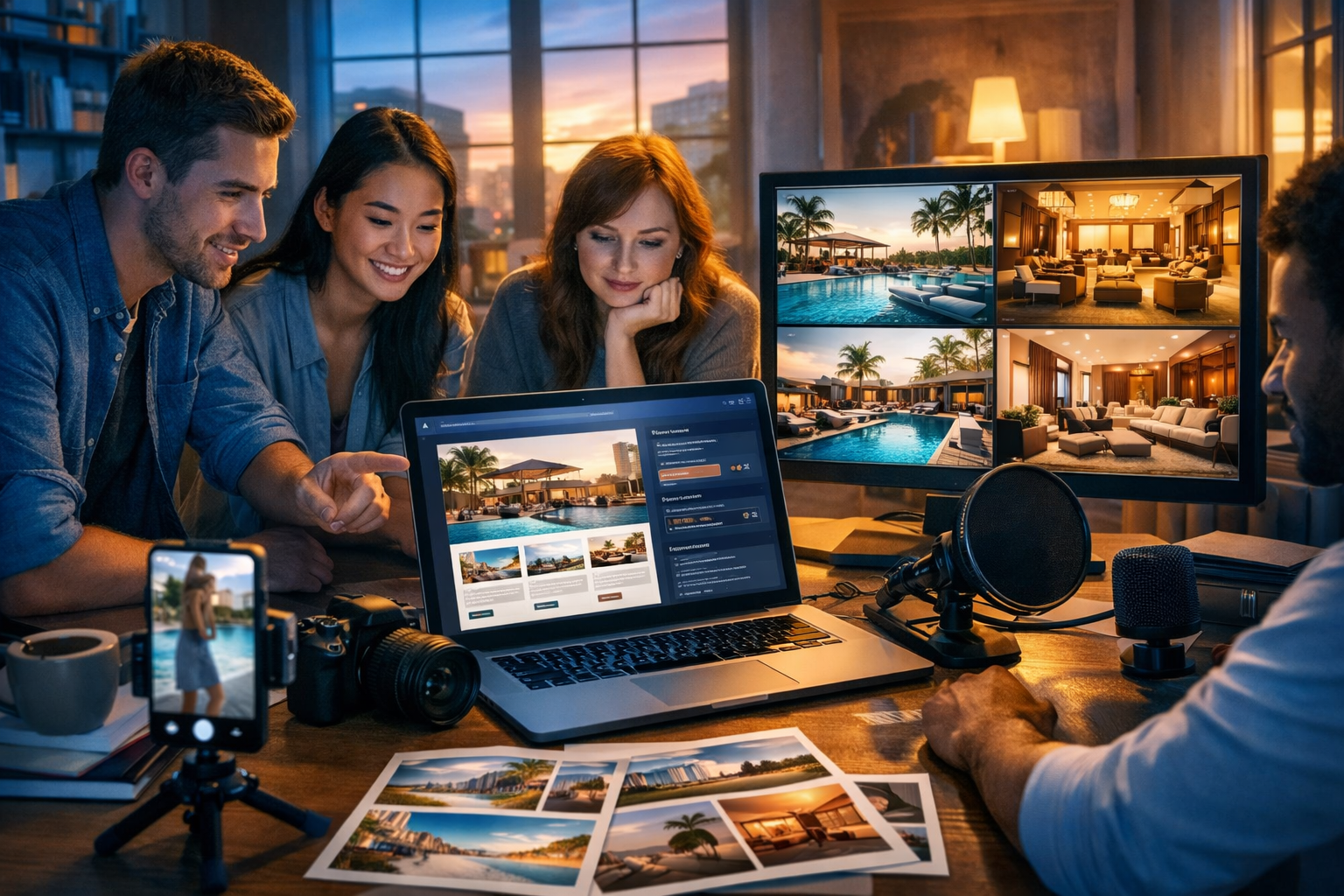
AI content for travel and hospitality brands is no longer a “nice to have”. When travellers compare dozens of hotels, tours, airlines and experiences in minutes, the brands that win are the ones that publish clear, trust-building content at speed—without sacrificing quality. The good news: with the right workflows, small teams can produce professional copy, visuals, videos and audio that drive enquiries and bookings.
Why AI content matters in travel and hospitality
Travel is emotional and high-consideration. People want inspiration, confidence and practical details—often across multiple channels: search, OTAs, social, email and on-property screens. The challenge is that content needs to be both creative (to spark desire) and precise (to reduce uncertainty).
AI helps by accelerating production and increasing consistency across touchpoints. Used well, it can:
- Scale destination pages, hotel room descriptions and FAQs without starting from a blank page every time.
- Localise messaging for different markets while keeping a consistent brand voice.
- Create scroll-stopping visuals and short-form videos that match seasonal campaigns.
- Add voice-overs and narration for ads, reels, in-room guides and podcasts.
- Test variations (headlines, CTAs, offers) faster, improving conversion rates.
With an all-in-one platform like Gen AI Last, teams can generate text, images, video and audio from simple prompts in one place, making it easier to keep campaigns aligned. Explore our AI content tools to see what you can produce end-to-end.
Where AI content fits across the traveller journey
The most effective travel content maps to intent. Here’s how AI can support each stage while still keeping a human layer of review and brand direction.
1) Dreaming and discovery (top of funnel)
At this stage, audiences want inspiration. AI can help you publish more “idea-led” content—without turning it into generic listicles.
- Blog and guides: “3-day foodie itinerary in Lisbon”, “Best family-friendly resorts in Crete”, “What to pack for a safari”.
- Social captions: Reels, carousels and story sequences with a consistent tone.
- Hero imagery: Campaign visuals and banners that fit your seasonal theme.
Tip: pair inspiration with specificity. AI outputs improve when you provide constraints like neighbourhoods, season, traveller type, budget range and accessibility needs.
2) Planning and comparison (mid funnel)
Now travellers are comparing options and looking for clarity. AI can produce structured, helpful content at scale, especially for properties or multi-location brands.
- Room and package descriptions: Clear benefits, inclusions, and who it’s best for.
- FAQ hubs: Check-in times, parking, pet policies, accessibility, cancellation rules.
- Email sequences: Pre-booking nurture flows, abandoned quote follow-ups, seasonal offers.
Tip: incorporate “trust signals” in content: review themes (not invented), certifications, sustainability policies, and practical transport info. Your team should verify every claim.
3) Booking and conversion (bottom of funnel)
At booking time, microcopy matters. AI is excellent for generating many variations quickly.
- Landing pages: Offer-led pages for weddings, events, spa weekends, or early-bird deals.
- Ads: Multiple headline and description combinations for paid search and social.
- On-site CTAs: Clear, benefit-driven buttons and reassurance copy.
Tip: build a “brand voice prompt” (examples below) and use it every time. Consistency increases trust, especially for premium hospitality brands.
4) Pre-arrival and in-stay experience
AI content doesn’t stop once the booking is made. Pre-arrival emails and on-property messaging reduce operational load while improving guest satisfaction.
- Pre-arrival series: Transport options, check-in tips, upsell experiences (spa, dining, late checkout).
- Audio guides: Narrated neighbourhood walks, museum tie-ins, or in-room welcome messages.
- Short videos: “How to get here”, “How to use the wellness facilities”, “What’s on this weekend”.
5) Post-stay retention and advocacy
Repeat stays and referrals are where profitability grows. AI can help create consistent post-stay touchpoints.
- Review request emails: Personalised, polite, on-brand.
- “Next trip” campaigns: Segmented by traveller type (family, business, couples, adventure).
- Seasonal content: Keep your audience engaged even when they’re not travelling.
What to create: high-impact AI content assets for travel brands
If you want results quickly, focus on assets that directly influence search visibility and bookings. Here are the most useful “building blocks” you can produce with Gen AI Last.
AI text generation: conversion-ready copy at scale
Travel teams often have too many pages to update: room types, experiences, destinations, seasonal packages, event spaces. AI text generation helps you publish and refresh content fast, while your team concentrates on accuracy and brand polish.
- SEO blog posts and destination guides that match real search intent (e.g., “best time to visit”, “how to get around”, “two-day itinerary”).
- Hotel and tour descriptions that highlight outcomes (sleep quality, views, convenience) rather than generic features.
- Email campaigns for seasonal offers, last-minute deals, loyalty and upsells.
- Social media copy that fits each platform’s style and character limits.
AI image generation: campaign visuals without constant photoshoots
You still need real photography for rooms and property truth. But AI images are extremely useful for supporting visuals: banners, social backgrounds, mood-led destination scenes, abstract travel textures, and campaign concepts that would be expensive to produce on demand.
- Seasonal banner variations (summer rooftop pool vs winter cosy lobby vibe).
- Social graphics that match your palette and feel consistent across posts.
- Concept imagery for experiences you’re promoting (spa calm, local food markets, guided hikes).
Best practice: avoid using AI images to represent specific rooms as “real”. Use them for thematic marketing assets, not for factual property representation unless clearly labelled and approved.
AI video generation: short-form that drives clicks and enquiries
Short video is crucial for travel marketing, but filming and editing takes time. AI video generation can help you produce explainer-style clips, promo reels, or animated storyboards for offers and itineraries.
- Offer videos: “Stay 3 nights, save 20%”, “Spa weekend package”, “Wedding open day”.
- Destination explainers: “How to spend 48 hours in Edinburgh”.
- Product demos: Walkthrough of booking steps or membership benefits.
AI audio generation: voice-overs, narration and ambient sound
Audio is an underused differentiator in hospitality. A calm voice-over can make a basic video feel premium, and narration can make information more accessible.
- Voice-overs for reels, ads and explainer videos.
- Podcast-style episodes (e.g., “local highlights”, “chef interviews”, “behind the scenes”).
- Background music for social clips (ensure you have the right usage rights for your outputs and distribution channels).
Practical workflows: how to produce travel content weekly
The fastest way to adopt AI is to build repeatable workflows. Below are three you can run every week with a small team.
Workflow A: SEO destination page + supporting social
- Choose one search intent: e.g., “best things to do in Bath in winter”.
- Generate an outline: include weather, transport, indoor/outdoor options, opening times considerations, accessibility notes.
- Draft the page: add a clear intro, scannable headings, and a short FAQ.
- Create 5–8 social captions: one per key highlight, with platform-specific lengths.
- Generate 2–3 image concepts: thematic, not misleading. Match your brand palette.
- Human review: fact-check, add local nuance, avoid overpromising, add internal links and conversion CTAs.
Workflow B: Package launch in 48 hours
- Define the offer: inclusions, dates, price range, booking deadline, terms.
- Generate landing page copy: headline options, benefit bullets, itinerary, what’s included, FAQs.
- Create a 20–30 second video: simple storyline: problem → offer → proof → CTA.
- Add a voice-over: warm, calm pacing; include reassurance (cancellation policy, limited availability if true).
- Produce email + ads: subject line variants and 3–5 ad copy sets.
Workflow C: Pre-arrival upsell sequence
- Segment by traveller type: couples, families, business, long-stay.
- Generate 3-email series: T-7 days, T-3 days, arrival day.
- Focus each email on one action: spa slot booking, dinner reservation, airport transfer.
- Include clear details: timings, prices (if fixed), how to book, what happens next.
- Optional audio: short “welcome note” narration embedded on a landing page or used on socials.
Prompt examples you can reuse (and improve)
Prompts work best when you provide brand voice, target audience, differentiators and constraints. Here are examples you can adapt in Gen AI Last.
Brand voice prompt (paste once, reuse often)
Prompt: “You are the content writer for a premium but friendly boutique hotel brand in the UK. Tone: warm, confident, not cheesy; avoid clichés like ‘nestled’ and ‘hidden gem’. Use British English. Prioritise clarity and trust. Do not invent awards, distances, or policies. If a detail is unknown, write a placeholder question for the editor. Write in short paragraphs and use scannable bullets where helpful.”
Room description prompt
Prompt: “Write a 160–190 word description for the ‘Deluxe King’ room. Target: couples and weekend breaks. Include: king bed, rainfall shower, blackout curtains, fast Wi‑Fi, quiet courtyard view, late checkout option (subject to availability). Add 5 benefit-led bullets and a gentle CTA. Avoid exaggeration and ensure it reads like a real hotel website.”
Destination guide prompt
Prompt: “Create an SEO-friendly guide: ‘48 hours in Edinburgh for first-timers’. Include an hour-by-hour itinerary for Day 1 and Day 2, a rainy-day alternative, and an FAQ (best time to visit, transport, budget tips). Keep it practical, specific, and non-generic. Use British English and include a short section on accessibility considerations.”
Reel script + voice-over prompt
Prompt: “Write a 25-second Instagram Reel script promoting a spa weekend package. Format: shot list + on-screen text suggestions (no more than 6 words per line) + voice-over narration. Tone: calm, premium, reassuring. Include CTA: ‘Book direct for the best rate’. Do not mention prices.”
SEO for travel brands: how to make AI content rank
Publishing more content only helps if it’s useful and distinctive. Use AI to accelerate output, then apply SEO fundamentals that matter in travel.
- Match intent precisely: “best time to visit” content differs from “where to stay” content. Keep each page focused.
- Demonstrate experience: add local tips, real itineraries, staff recommendations, and verified logistics.
- Include FAQs: travellers search with questions; a strong FAQ improves relevance and reduces customer service queries.
- Strengthen internal linking: connect destination guides to packages, rooms and enquiry pages.
- Refresh seasonally: update opening hours notes, event timings, and seasonal availability statements.
AI can draft quickly, but your competitive edge comes from what only you know: real guest questions, actual on-property details, and local knowledge.
Trust, accuracy and compliance: what travel marketers must get right
Hospitality is sensitive to trust because it involves money, safety and expectations. Build a simple review checklist before publishing AI-assisted content.
- No invented facts: distances, travel times, awards, star ratings, policies and inclusions must be verified.
- Be careful with imagery: don’t present AI visuals as real rooms or facilities unless you clearly disclose and have approval.
- Fair offers: terms and exclusions should be clear (blackout dates, minimum stay, deposit rules).
- Accessibility and inclusivity: use respectful language and provide accurate access information where possible.
- Brand safety: avoid sensitive stereotypes about destinations and cultures; keep tone respectful and informed.
How Gen AI Last supports travel and hospitality teams
Many travel marketers struggle with tool overload—one platform for copy, another for design, another for voice-overs. Gen AI Last brings text, image, video and audio generation together, helping small teams produce complete campaigns from a single prompt-driven workflow.
Typical uses include:
- Generating SEO blog posts, landing pages, product descriptions and email campaigns for hotels, airlines, tour operators and hospitality groups.
- Creating marketing visuals and social graphics that match seasonal themes without waiting on a full photoshoot.
- Producing short marketing videos, reels and explainers to promote packages and destination highlights.
- Adding voice-overs, narration and background music to elevate video content and improve accessibility.
And because every plan includes full access to text, image, audio and video generation, it’s practical for startups and lean marketing teams. You can view pricing from $10/month or start creating for free.
A simple 7-day action plan to start using AI content
If you want momentum without overwhelm, follow this one-week rollout.
- Day 1: Document your brand voice (tone, banned phrases, target audience, proof points).
- Day 2: Pick one high-intent page to improve (a package or a key room type) and generate 3 copy versions.
- Day 3: Create 10 social captions from the best version; schedule 5 immediately.
- Day 4: Generate 3 banner images for the same offer (seasonal variations).
- Day 5: Produce a 20–30 second video and add a voice-over.
- Day 6: Build a short email campaign (2–3 emails) aligned to the offer.
- Day 7: Review performance and feedback; update your prompts based on what converted and what guests asked.
Final thoughts: scale content without losing the human touch
AI content for travel and hospitality brands works best when it amplifies what you already do well: storytelling, service and local expertise. Use AI to draft, vary and format—then let your team add the details that make the experience real, accurate and compelling.
If you’re ready to create copy, visuals, video and audio from one platform, explore our AI content tools and build your next travel campaign faster.
Ready to Create with Generative AI?
Join thousands of creators using Gen AI Last to generate text, images, audio, and video — all from one platform. Start your 7-day free trial today.
Start Free — Try 7 DaysQuick Links
Create AI content from $10/month
View Plans