AI image generation trends and best tools for marketing in 2026
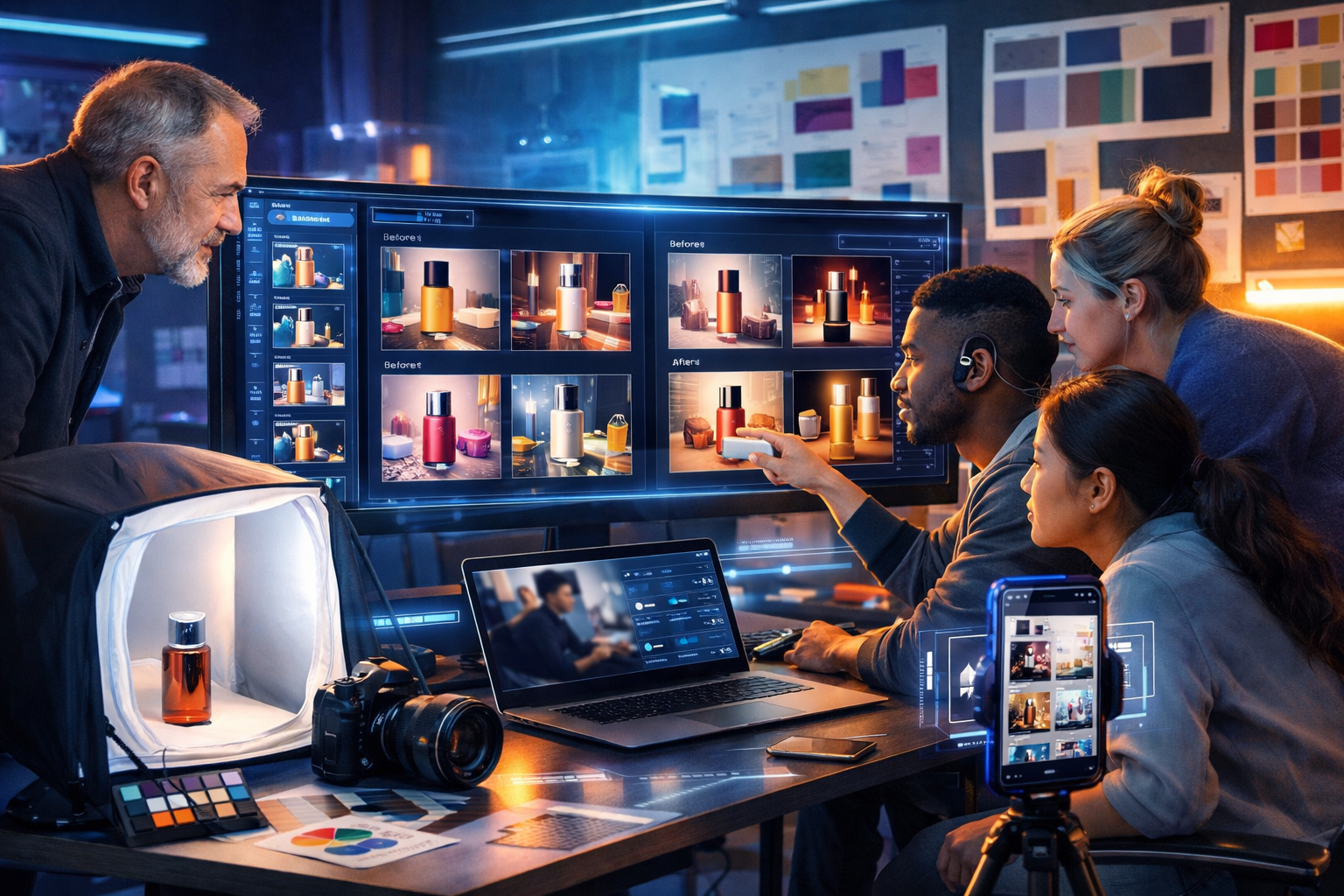
AI image generation has moved from “nice-to-have” to a core marketing production layer. In 2026, the winners won’t be the brands that generate the most images—they’ll be the ones that generate the right images quickly, consistently, and compliantly, then deploy them across ads, emails, product pages and social at scale. This guide covers the biggest AI image generation trends and best tools for marketing in 2026, plus practical workflows and prompt patterns you can use immediately.
Why AI images matter more for marketing in 2026
Audiences are now accustomed to frequent creative refreshes. Platforms reward variation (new hooks, new formats, new imagery), and shoppers expect richer visuals: lifestyle shots, close-ups, UGC-style content, and product-in-use scenes across every channel. Traditional design and photography pipelines struggle to keep up—especially for startups and small teams.
AI image generation helps marketers produce on-brand visuals for campaigns, landing pages and social quickly, while freeing designers to focus on high-impact concepts and art direction. The most successful teams treat AI as a production engine with a brand system (style rules, consistent product depiction, approval checks), not a random image slot machine.
AI image generation trends shaping marketing in 2026
1) Brand consistency moves from “prompting” to “systems”
In 2026, the biggest shift is that brands stop relying on one-off prompts and start building repeatable “creative recipes”. These include:
- A defined visual language (colour palette, contrast level, lighting style, lens choices, composition rules).
- Reusable prompt blocks for key formats (hero banners, product tiles, story backgrounds, email headers).
- Reference assets (product photos, brand style imagery) to keep outputs consistent.
- Approval gates: legal/compliance checks and brand sign-off before publishing.
This is where all-in-one platforms shine—when image generation sits next to copy, video and audio, your brand system can be applied across formats. Gen AI Last is built for that type of workflow, letting you generate marketing visuals and supporting campaign copy in one place via our AI content tools.
2) Product realism becomes a baseline expectation
Consumers can spot “AI weirdness” instantly. The 2026 standard is photoreal outputs with correct materials, reflections, shadows, and accurate product proportions. Marketers increasingly use AI for:
- New angles and environments from a limited product photo set.
- Lifestyle scenes tailored to audiences (home office, gym, café, outdoors).
- Seasonal refreshes without reshoots (summer vs winter lighting and styling).
The trend is “product-first generation”: start with a clean product reference and generate scenes around it, rather than inventing the product from scratch. It reduces customer confusion and lowers return risk.
3) Personalised creative at scale (but with guardrails)
Personalisation in 2026 is less about inserting a name and more about matching the viewer’s context: location, season, lifestyle, device, and intent stage. AI-generated imagery supports:
- Geo-tailored backgrounds (city vibes, countryside, coastal, urban commute).
- Segmented demographics without stereotyping (thoughtful representation).
- Intent-tailored scenes (discovery: aspirational lifestyle; comparison: feature close-ups; purchase: product + proof).
Guardrails matter: you need internal rules for sensitive attributes, prohibited claims, and brand-safe representation. Build a checklist for what can and cannot be depicted.
4) “Creator-style” visuals continue to outperform polished ads
UGC aesthetics remain dominant. AI now generates believable creator-style scenes: handheld framing, natural indoor lighting, slightly imperfect composition, authentic environments. For marketers, this means you can test UGC-like angles and backdrops even before you commission creators.
A useful approach is to produce three creative tiers for each campaign:
- UGC-style for scroll-stopping social placements.
- Brand lifestyle for landing pages and remarketing.
- Premium studio for hero images, press kits, and top-of-funnel awareness.
5) Multimodal campaigns: image + video + voice produced together
The strongest marketing isn’t “an image”. It’s a coordinated set: static ads, short-form video variations, voice-over for reels, and channel-specific copy. In 2026, teams increasingly generate the entire creative pack from one campaign brief.
With Gen AI Last, you can create the key visual, then generate supporting social captions, email copy, voice-over narration, and even short marketing videos inside the same workflow—without stacking separate subscriptions. If you’re cost-conscious, view pricing from $10/month for full access to text, image, audio and video generation.
6) Compliance, provenance and “safe creativity” become marketing requirements
Regulators and ad platforms are paying closer attention to misleading imagery, particularly for health, finance, politics, and heavily regulated products. The 2026 trend is to build “safe creativity” into your process:
- Avoid depicting impossible product outcomes or before/after claims without substantiation.
- Be cautious with logos, trademarks, and recognisable copyrighted characters.
- Use internal review for sensitive categories (skin, body, medical, financial guarantees).
Practical tip: maintain a “do-not-generate” list for your brand (competitor marks, restricted claims, risky depictions) and keep it alongside your prompt templates.
Best tools for AI image generation in marketing (2026 shortlist)
The “best tool” depends on your team size, output volume, need for control, and whether you also want text/video/audio generation. Below is a marketing-focused comparison of the main categories marketers use in 2026.
1) All-in-one marketing content platforms (best for speed and small teams)
Best for: startups, agencies, solo marketers, small e-commerce brands that need a complete creative pipeline.
What to look for: solid image generation for ads and social, plus the ability to generate copy, video and audio from the same brief.
Where Gen AI Last fits: Gen AI Last combines AI text, image, video and audio generation in one platform. You can create campaign images (banners, product visuals, social graphics), then instantly generate supporting assets like email sequences, landing page copy, voice-over narration, and short promo videos using the same positioning and audience description. This reduces tool-hopping and keeps brand messaging aligned.
- Strength: unified workflow; predictable pricing; ideal for rapid iteration.
- Watch-outs: if you need deep, technical image controls, you may pair it with a specialist tool for certain edge cases.
If you want to test a full campaign workflow quickly, start creating for free and build a set of ad images plus matching copy in one session.
2) High-end creative suites (best for advanced brand work)
Best for: design teams that need tight art direction, advanced editing, and integration with professional creative workflows.
Strength: high control, strong editing capabilities, good for enterprise brand governance.
Watch-outs: cost and complexity; may require training and multiple licences.
3) Specialist image generators (best for maximum image quality or specific styles)
Best for: teams that live and breathe creative testing and want cutting-edge models for photoreal, illustration, or cinematic aesthetics.
Strength: often strongest model innovation and stylistic breadth.
Watch-outs: fragmented workflow—still need separate tools for copywriting, video, voice and distribution assets.
4) Product-focused visual tools (best for e-commerce catalogues)
Best for: large product catalogues needing background generation, consistency, and SKU-level automation.
Strength: efficiency for product imagery and marketplace requirements.
Watch-outs: may be less flexible for lifestyle storytelling and ad creativity.
A practical 2026 workflow: from brief to multi-channel creative pack
Use this workflow to create a complete set of marketing assets with repeatable quality. It’s designed for small teams that need results fast.
Step 1: Write a “visual brief” in 10 lines
Before prompting, capture:
- Offer: what you’re promoting and the key benefit.
- Audience: who it’s for (role, lifestyle, pain points).
- Channel: where it appears (Meta feed, TikTok, LinkedIn, email header, website hero).
- Visual style: UGC / lifestyle / studio; colour and lighting mood.
- Must include: product angle, packaging, key objects, setting.
- Must avoid: restricted claims, competitor marks, sensitive depictions.
Step 2: Generate 12–20 image variations, then shortlist ruthlessly
The 2026 mindset is “variation first, polish second”. Generate a batch, then select 3–5 winners based on:
- Immediate readability at small sizes (thumbnail test).
- Clear product presence and believable lighting.
- Brand fit (palette, tone, audience relevance).
Step 3: Create matching copy and creatives as a set
A common failure is to create an image, then write copy that doesn’t match the scene. Instead, treat the image as the “truth” and generate copy aligned to what’s visible: setting, benefit, emotion, and CTA. With Gen AI Last, you can generate ad headlines, primary text, email subject lines and landing page sections alongside the visuals using our AI content tools.
Step 4: Repurpose to video and audio for higher reach
In 2026, you should assume every static concept will need a short video variant. Create a 6–15 second reel based on the same concept (product hero shot, benefit overlays, quick demo cuts) and add a voice-over for accessibility and retention. Gen AI Last supports AI video and audio generation, so you can turn a campaign concept into a full pack without extra tools.
Prompt patterns that work in 2026 (with examples)
High-performing marketing prompts tend to be structured. Use these patterns and swap in your product, audience and channel.
Pattern A: Photoreal product lifestyle (conversion-focused)
Template: “Photorealistic [product] in a [setting] used by [persona]. [Lighting]. [Camera/lens]. [Composition]. [Brand palette]. Include [supporting objects]. No text, no logos, no watermark. 16:9.”
Example: “Photorealistic insulated water bottle on a gym bench, athlete tying laces nearby, cool morning light with soft shadows, 50mm lens look, shallow depth of field, teal and charcoal accents, include towel and headphones, clean realistic reflections, no text, no logos, 16:9.”
Pattern B: UGC-style social ad background (scroll-stopping)
Template: “Handheld smartphone photo style, [messy/real] environment, natural lighting, candid moment featuring [product], imperfect framing, authentic textures, no text, 9:16 or 4:5.”
Example: “Handheld smartphone photo style, small kitchen at night, warm under-cabinet lighting, candid moment of someone pouring a ready-to-drink protein shake, slight motion blur, authentic clutter but tidy enough, no text, 4:5.”
Pattern C: Brand-safe hero banner (homepage/email header)
Template: “Clean commercial studio photo of [product] on [surface], high-key lighting, ample negative space on the [left/right] for copy placement, subtle gradient background in [brand colours], crisp shadows, no text, 16:9.”
Example: “Clean commercial studio photo of a skincare bottle on matte stone surface, high-key softbox lighting, ample negative space on the right, subtle cream-to-sage gradient background, crisp but soft shadow, no text, 16:9.”
How to choose the best AI image tool for your marketing team
Use these criteria to decide quickly:
- Output type: do you mainly need social creatives, product images, or brand campaigns?
- Consistency: can you keep the product and brand style consistent across 30+ variations?
- Speed to publish: how fast can you go from brief to a ready-to-run ad set?
- Workflow fit: can your team generate copy, video and audio around the same concept?
- Cost predictability: does pricing scale sensibly for a small team?
- Compliance support: do you have an internal checklist and review process?
If you’re a startup or small team, the biggest leverage usually comes from a unified stack. Gen AI Last keeps your campaign creation centralised—text for ads and emails, images for creatives, video for reels, and audio for voice-overs—starting at a price point that makes ongoing testing realistic. You can view pricing from $10/month to compare against running multiple specialist subscriptions.
Common mistakes marketers make with AI-generated images (and how to avoid them)
- Chasing novelty over clarity: if the product isn’t instantly recognisable, performance usually drops. Prioritise clear product depiction and a single visual idea.
- Ignoring platform formats: generate with placement in mind (16:9 for banners, 4:5 for feeds, 9:16 for stories/reels).
- Over-stylising: heavy “AI art” looks can reduce trust for direct-response ads. Keep photoreal where conversion matters.
- No brand system: without reusable style rules, your feed looks inconsistent and cheaper than it should.
- Skipping compliance checks: avoid risky depictions and unsubstantiated claims—especially in regulated categories.
A ready-to-use checklist for 2026 campaign images
Before you launch, confirm:
- The product is accurate (shape, materials, colours, packaging details).
- Lighting and shadows look believable; no odd artefacts on edges or hands.
- Composition supports the CTA (space for overlay text if needed).
- Representation is inclusive and non-stereotyped.
- No unauthorised logos, trademarks, or confusing brand lookalikes.
- Claims implied by the image are supportable (especially results-based visuals).
Putting it all together with Gen AI Last
The practical advantage of Gen AI Last for 2026 marketing is workflow continuity. You can start with a campaign brief, generate multiple on-brand image variations for ads and banners, then immediately produce the supporting pieces: social captions, email campaigns, landing page copy, short promo videos and voice-overs. That’s particularly valuable for small teams who need to ship quickly without hiring a full production crew.
To build your first “creative recipe”, pick one product or offer and create:
- 3 lifestyle images (different settings for different segments)
- 2 UGC-style backgrounds for social
- 1 clean hero banner with negative space
- Matching ad copy + an email announcement
- A 10-second video variant with a short voice-over
When you can produce that pack in a repeatable way, you’re no longer “trying AI”—you’re operating a modern marketing studio.
FAQ: AI image generation trends and best tools for marketing in 2026
Will AI-generated images replace product photography in 2026?
For many brands, AI reduces the number of shoots needed, but it doesn’t eliminate photography. A small set of accurate product photos often becomes the foundation for AI-driven variations (new contexts, angles, seasonal styling).
What’s the biggest trend to focus on for performance?
Consistency plus iteration: a strong, recognisable brand look combined with rapid A/B testing of scenes, hooks and formats. AI helps you produce enough high-quality variants to learn quickly.
What’s the most practical tool choice for a small team?
An all-in-one platform is usually the fastest route to shipping complete campaigns. With Gen AI Last, you get image, text, video and audio generation from $10/month, making ongoing creative testing financially realistic.
How do you keep outputs on-brand?
Use a brand prompt template (palette, lighting, composition), keep reference assets consistent, and maintain a library of approved prompt blocks for each channel. Review against a checklist before publishing.
Next steps
Choose one campaign and apply the 2026 approach: generate a controlled set of variations, pick winners, then build a multi-channel creative pack (image + copy + video + audio). If you want a single place to do it all without multiple subscriptions, explore our AI content tools and start creating for free.
Ready to Create with Generative AI?
Join thousands of creators using Gen AI Last to generate text, images, audio, and video — all from one platform. Start your 7-day free trial today.
Start Free — Try 7 DaysQuick Links
Create AI content from $10/month
View Plans