AI Voice Cloning for Brand Consistency: A Practical Guide
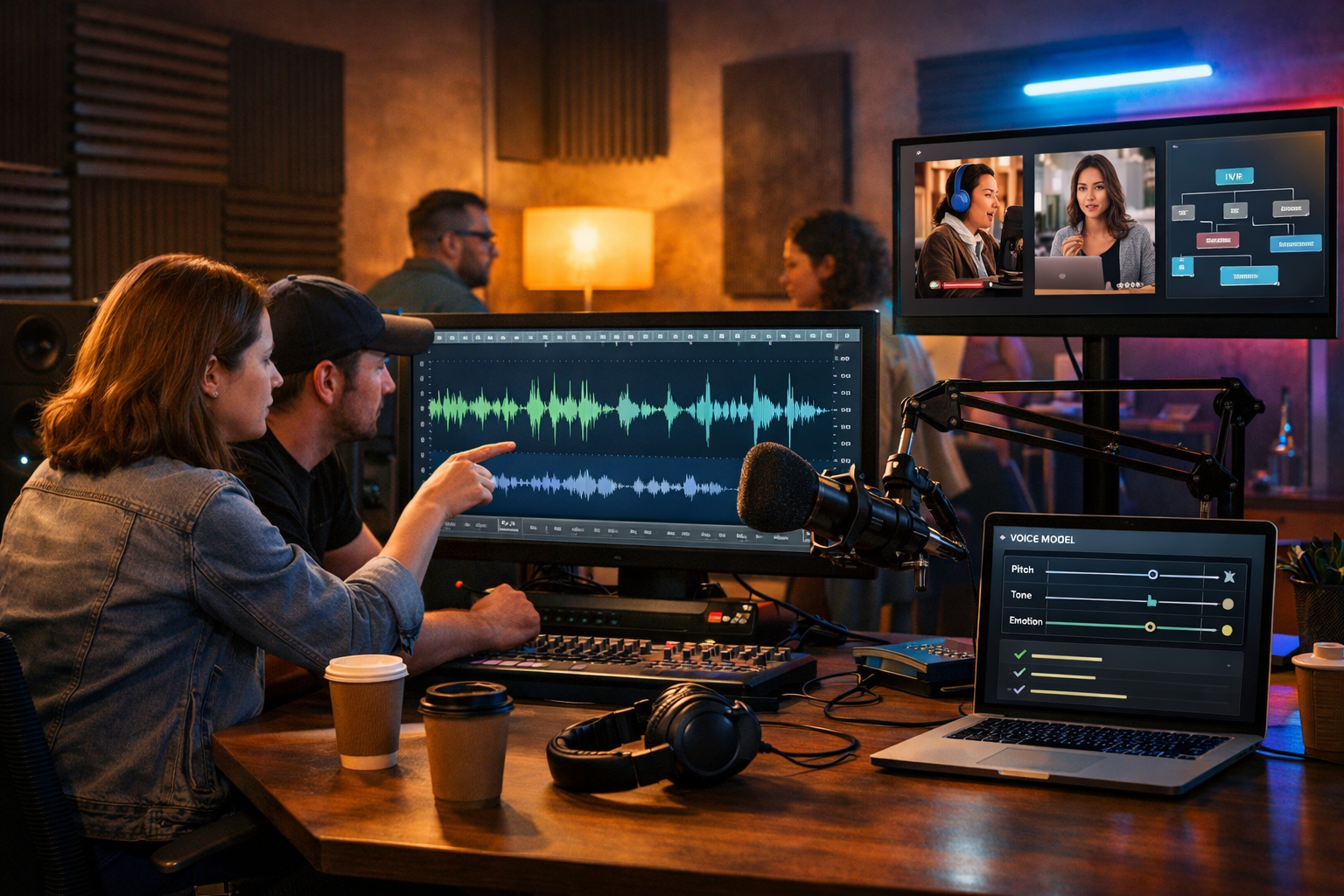
AI voice cloning for brand consistency helps companies sound like “one brand” everywhere—your explainer videos, product demos, podcasts, IVR phone menus, and social ads—without repeatedly booking the same voice talent for every tiny update. Done properly, it can improve recall, reduce production delays, and keep tone and pronunciation consistent as your content scales.
What is AI voice cloning (and how it supports brand consistency)?
AI voice cloning is the process of creating a synthetic voice that closely matches a real speaker’s vocal characteristics—such as timbre, pacing, accent, and intonation. Once you have a voice model, you can generate new narration from text while retaining the same “speaker identity” across different pieces of content.
Brand consistency in audio is the equivalent of using the same logo, colour palette, or visual style guide. When your audience repeatedly hears the same voice style—confident, friendly, direct, or premium—it becomes part of your brand memory. The goal isn’t only to sound identical every time; it’s to sound intentionally consistent across channels and teams.
Where consistent voice matters most
- Video marketing: product demos, social reels, explainer videos, paid ads.
- Audio-first channels: podcasts, audiobooks, in-app guidance, background narration.
- Customer support: IVR menus, hold messages, onboarding walkthroughs.
- Global teams: centralised voice style with localised scripts.
Why brands adopt AI voice cloning: the business case
Traditional voice production is effective but can be slow: scheduling talent, revisions, pickups, studio time, and file handoffs. AI voice cloning doesn’t replace good creative direction; it reduces friction so you can iterate faster while keeping the same recognisable sound.
Key benefits
- Faster updates: change a feature name, pricing line, or compliance statement without rebooking a studio.
- Consistent pronunciation: product names, brand terms, and industry jargon stay aligned.
- Lower per-asset cost: scale voiceovers across campaigns while controlling spend (especially for small teams).
- Unified tone across formats: the same “brand voice” can narrate a TikTok-style reel and a long-form demo.
- Campaign agility: A/B test scripts quickly and refine what performs best.
A simple example
Imagine you launch a new feature and need:
- a 20-second paid social voiceover
- a 2-minute product walkthrough video
- a short in-app onboarding narration
With AI voice cloning, all three can sound like the same speaker, in the same tone, with consistent pacing—so the user experience feels joined up rather than stitched together.
How AI voice cloning works (in plain English)
Most voice cloning systems use machine learning to map patterns in recorded speech: how a person forms vowels and consonants, where they pause, and how they rise and fall in pitch. You typically provide training audio (or an authorised voice sample), and the model learns to reproduce that voice with new text.
Quality depends on inputs. Clear recordings, consistent mic setup, low background noise, and natural delivery will produce a more reliable voice model. The script you generate later matters too: well-written, well-punctuated copy results in a more natural-sounding performance.
Voice cloning vs text-to-speech (TTS)
- Standard TTS: you choose from generic voices; it’s quick but may not match your brand identity.
- Voice cloning: you create a unique voice that matches your brand’s chosen spokesperson or character voice.
If your goal is brand consistency, cloning is usually the better fit—provided you do it ethically and with the right permissions.
Use cases: where “one voice” drives stronger marketing
1) Always-on paid ads and rapid iterations
Ads are iteration-heavy: you tweak hooks, CTAs, offers, and compliance language frequently. With a cloned brand voice, you can update copy weekly while maintaining a consistent audio identity. This can make retargeting sequences feel cohesive—like one ongoing conversation rather than disconnected creatives.
2) Product demos and feature walkthroughs
SaaS teams commonly update UI flows. A cloned voice reduces the cost of pickups and patch recording. You can keep the same narrator even if the original talent is unavailable, ensuring the demo library stays consistent across versions.
3) Podcasts and branded audio series
Not every podcast needs the founder’s voice for every segment. Some teams use a consistent cloned narrator for intros, sponsor reads, and recurring segments—keeping sound uniform while allowing human hosts to focus on interviews and commentary.
4) Multilingual campaigns (with care)
A consistent voice identity can support localisation by keeping the same “speaker feel” across markets. However, accuracy and cultural nuance matter: always validate translations with native reviewers and consider whether a local voice would be more authentic for certain regions.
How to implement AI voice cloning for brand consistency (step-by-step)
Step 1: Define your audio brand guidelines
Before cloning anything, document what “on-brand” sounds like. Treat it like a mini style guide for voice:
- Tone: warm, authoritative, playful, minimalist, premium, energetic?
- Pace: fast and punchy vs calm and measured.
- Pronunciation rules: product names, acronyms, competitor references, industry terms.
- Allowed emotions: enthusiastic for promos, neutral for compliance, empathetic for support.
- Do-not-do list: slang, sarcasm, shouting, overly “salesy” delivery, etc.
This prevents the common problem where the same cloned voice sounds inconsistent because the underlying scripts were written inconsistently.
Step 2: Choose the right voice “source” (and secure permission)
For brand consistency, you typically choose one of these sources:
- Founder/executive voice: high trust and recognisability, but ensure long-term availability and formal consent.
- Professional voice actor: reliable performance, easier direction, and clearer licensing terms.
- Brand character voice: great for consumer brands; keep it consistent across ads, apps, and videos.
Get explicit written permission, define usage scope (channels, regions, term length), and document who owns what. If you work with an actor, ensure the contract covers synthetic voice generation.
Step 3: Record clean training audio (quality in, quality out)
Even if your platform can work with limited samples, higher-quality recordings tend to yield more natural results. Aim for:
- a quiet room with minimal echo (soft furnishings help)
- a consistent mic distance and stable speaking volume
- clean audio (no music bed, no background chatter)
- varied sentences: questions, numbers, brand terms, and different emotions
Tip: record a short “brand pronunciation list” as part of the training set so the voice model handles your key terms consistently.
Step 4: Build scripts that sound human (your copy matters)
A voice model can only perform what you write. To keep delivery natural:
- write short sentences and vary rhythm
- use punctuation for pacing (commas, dashes, ellipses where appropriate)
- spell out tricky acronyms the first time
- avoid dense paragraphs for voiceovers—write for listening, not scanning
With our AI content tools, you can generate voiceover-ready scripts, ad variations, and video outlines from a single brief, then refine them with your audio style guide to maintain consistent brand tone.
Step 5: Produce, review, and standardise your approvals
Create a lightweight QA checklist so every output stays on-brand:
- Accuracy: are names, features, and claims correct?
- Pronunciation: are brand terms and numbers read correctly?
- Tone: does it match the channel (support vs sales vs education)?
- Pacing: does it fit the visual edit and platform constraints?
- Compliance: required disclaimers included and clear?
Once approved, store the “gold standard” settings (speed, emphasis patterns, audio processing) so future assets don’t drift.
Making it truly consistent: build a “voice system”, not one-off clips
The biggest gains come when you treat cloned audio like a reusable system across content types. That means aligning your text, audio, and video workflows so the voice is always paired with consistent visuals and messaging.
A practical workflow for small teams
- Write once, repurpose everywhere: generate a master script, then derive ad cut-downs, email copy, and social captions.
- Create matching visuals: generate consistent creative concepts and campaign images for each script variant.
- Turn scripts into videos: produce short explainers and product reels with the same narrator.
- Publish with a consistent cadence: series-based content builds familiarity.
Gen AI Last supports this “single brief → multiple assets” approach: use AI text generation for scripts, AI audio generation for voiceovers, plus AI image and video generation for the creative that surrounds the voice—all in one platform. If you want an affordable way to keep production consistent, you can view pricing from $10/month.
Risks, ethics, and legal considerations (don’t skip this)
AI voice cloning is powerful, which means it can be misused. Brands should treat voice as a protected identity asset and implement safeguards from day one.
Core rules for responsible use
- Consent is mandatory: only clone voices you own or have explicit permission to use.
- Clear licensing terms: define channel usage, length of use, and whether voice models can be retrained or transferred.
- Avoid deception: don’t present synthetic speech as a real-time statement from a person where it could mislead audiences.
- Data security: restrict access to training audio and generated outputs, especially for executives.
- Human review: keep an approval process, particularly for regulated industries.
When to disclose synthetic audio
Disclosure requirements vary by jurisdiction and context. A sensible approach is to disclose when there’s a reasonable chance of audience confusion—particularly for testimonials, customer support, political content, or executive communications. When in doubt, consult legal counsel and follow platform policies.
Quality checklist: what makes a cloned brand voice sound “real”?
Audiences forgive a lot if the message is useful, but inconsistent audio can reduce trust. Use this checklist to keep output professional:
- Natural pacing: avoid rushed delivery; insert pauses where meaning changes.
- Emotion control: match the intent—support content should sound calm and reassuring.
- Breathing and cadence: some contexts benefit from subtle human-like phrasing; others should be clean and neutral.
- Audio processing: apply consistent EQ, compression, and loudness targets across assets.
- Channel fit: what works for TikTok may sound over-energetic for a product onboarding tutorial.
Measuring success: how to tell if brand consistency is improving
Voice consistency isn’t just subjective—track indicators that tie to marketing performance and customer experience:
- Creative throughput: number of voiceover assets shipped per month.
- Time to publish: average time from script approval to final audio/video.
- Ad performance: watch-through rate, click-through rate, and conversion rate by narrator style.
- Support metrics: call containment and customer satisfaction for IVR and onboarding narration.
- Brand recall testing: quick surveys asking if users recognise the brand by voice.
Quick-start: a 7-day plan for implementing a consistent AI voice
- Day 1: draft your audio style guide (tone, pace, pronunciations, do-not-do list).
- Day 2: choose your authorised voice source and confirm consent/licensing.
- Day 3: record clean training audio plus a brand term pronunciation list.
- Day 4: generate 5 script variants for one campaign and select the strongest.
- Day 5: produce audio drafts, review against the QA checklist, adjust pacing.
- Day 6: build one short video and one audio-only asset using the same voice.
- Day 7: publish, measure initial performance, and lock in your “approved settings”.
Bring it all together with Gen AI Last
AI voice cloning for brand consistency works best when audio isn’t treated as a separate afterthought. Your scripts, visuals, and videos should reinforce the same message and tone—so every touchpoint feels like it comes from one coherent brand.
Gen AI Last is built for teams that need to ship high-quality content quickly without enterprise budgets: generate campaign scripts and variations, create supporting images, produce marketing videos, and deliver consistent voiceovers and narration—starting at an accessible price point. If you want to test a workflow for your next campaign, start creating for free and explore how a consistent brand voice can carry across your entire content pipeline.
FAQ: AI voice cloning for brand consistency
Is AI voice cloning suitable for small businesses?
Yes—especially when you produce frequent updates across ads, product videos, and support content. The main requirement is responsible consent and a repeatable review process.
Will audiences notice it’s AI?
If scripts are written for speech, audio is clean, and tone is consistent, many listeners focus on clarity and usefulness. Always prioritise transparency where required and avoid misleading contexts.
Can we use one cloned voice for every channel?
Often yes, but you may want channel-specific “delivery profiles” (e.g., more energy for ads, calmer delivery for onboarding). Consistency is about identity and tone, not identical performance in every situation.
What’s the biggest mistake brands make?
Skipping the voice style guide. Without it, different teams write scripts that pull the same voice in different directions—resulting in an inconsistent brand impression.
Ready to Create with Generative AI?
Join thousands of creators using Gen AI Last to generate text, images, audio, and video — all from one platform. Start your 7-day free trial today.
Start Free — Try 7 DaysQuick Links
Create AI content from $10/month
View Plans