AI Voice Cloning for Brand Consistency: A Practical Guide
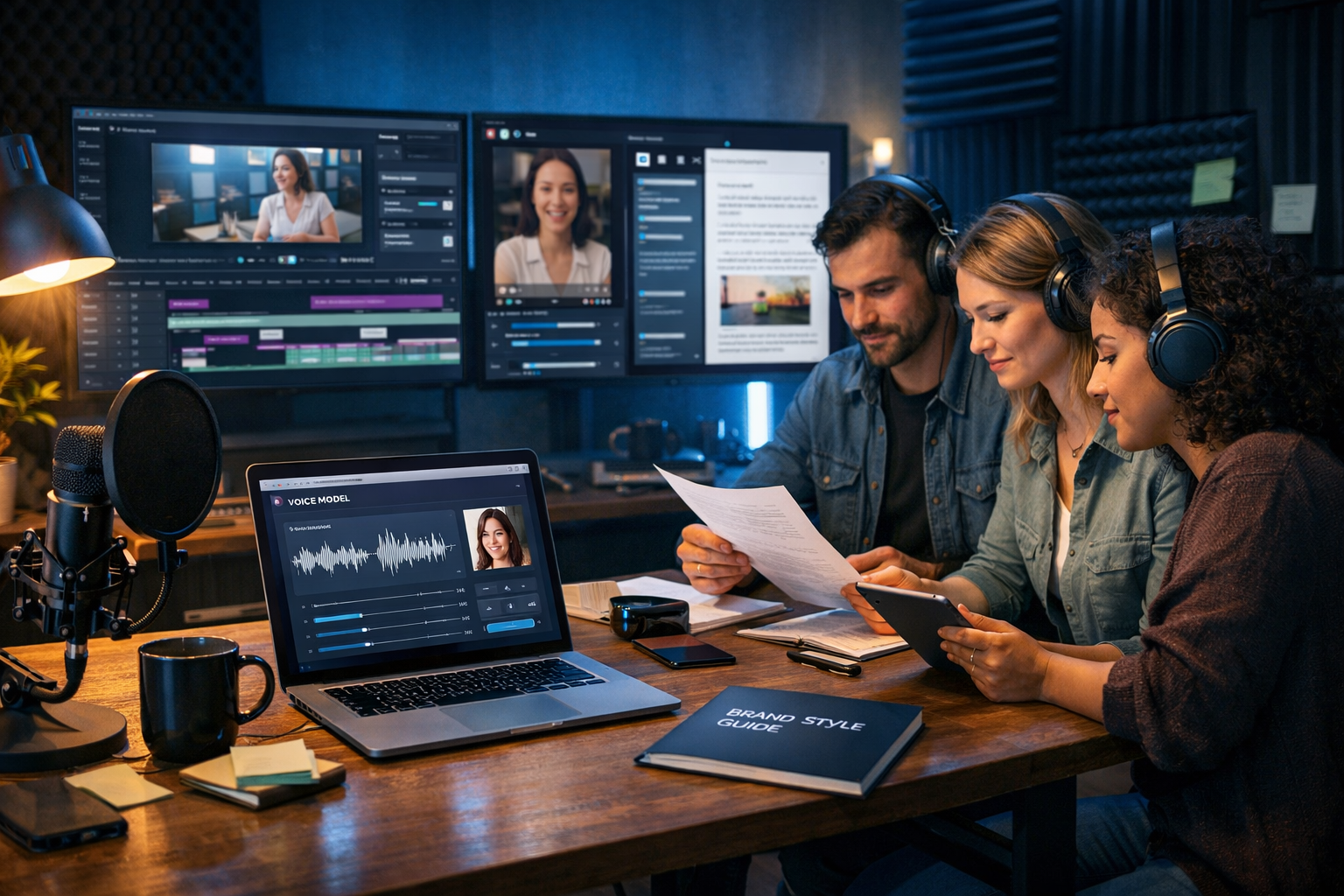
AI voice cloning for brand consistency is how modern teams keep a recognisable sound across every touchpoint—ads, product demos, onboarding videos, podcasts and even internal training—without booking a studio session for every new script. Done well, it protects the identity you’ve built while letting you produce high-quality voice content on demand, in multiple formats, and at a pace that matches today’s marketing cycles.
What AI voice cloning means for brand consistency
Brand consistency is not only visual. Customers recognise a brand by how it sounds: pacing, warmth, formality, accent, pronunciation of product names, and even the type of enthusiasm used in calls-to-action. Traditional voice work relies on one or more voice actors—great for quality, but expensive and difficult to schedule.
AI voice cloning creates a synthetic voice model based on a real voice (with permission). When you generate new audio, the output can maintain the same vocal timbre and speaking style across different scripts, channels and languages (depending on the model). That consistency helps audiences instantly recognise your brand, even when the message changes daily.
Where the “brand voice” shows up in audio
- Voice-over for paid social and YouTube ads
- Explainer videos and product demos
- Podcast intros/outros and sponsorship reads
- App walkthroughs, onboarding, and in-product tutorials
- E-learning, internal enablement, and customer training
- IVR and automated support messaging (where appropriate)
Why brands adopt AI voice cloning (beyond cost)
Saving money matters, especially for startups. But teams typically adopt AI voice cloning because it removes friction from production. Audio becomes editable content, not a fixed recording you have to live with.
Key advantages for small teams
- Speed: produce new voice-overs in minutes when product messaging changes.
- Consistency at scale: keep the same signature voice across 20 variations of an ad or multiple product lines.
- Campaign testing: A/B test different hooks and CTAs without rebooking talent.
- Localisation: build a repeatable workflow for multi-region content, while keeping the same brand “feel”.
- Version control: update a single line (“Now available in the EU”) without re-recording the entire asset.
The brand-consistent voice framework: what to define before you clone
AI voice cloning works best when the voice is treated like any other brand asset. Before you generate anything, clarify what “on-brand audio” means in a way that creatives and marketers can follow.
1) Voice persona (identity)
Document the human qualities your brand voice should convey. Example:
- Personality: calm, confident, friendly, practical.
- Energy: medium energy; no shouting; upbeat on CTAs.
- Accent: neutral British English; avoid region-specific slang.
- Formality: clear and professional; avoid jargon unless defined.
2) Pronunciation rules (brand vocabulary)
This is where brand consistency often breaks. Create a list for:
- Product and feature names
- Company name pronunciation
- Acronyms and initialisms (say as letters vs words)
- Competitor names (if mentioned)
Tip: Keep a “phonetic spelling” column and example sentences. This becomes your audio equivalent of a brand style guide.
3) Pacing, pauses, and emphasis
A brand can sound rushed even when the words are right. Decide:
- Average pace (slow/medium/fast)
- How you handle lists (slight pause between items)
- What words get emphasis (benefit-led phrases, outcomes, guarantees)
A step-by-step workflow for AI voice cloning for brand consistency
Below is a practical workflow that small teams can run weekly. It’s designed to keep output consistent across audio, video and supporting copy.
Step 1: Get the legal and ethical foundations right
Only clone a voice with explicit permission from the voice owner (or with a contract that grants these rights). Make sure you have written approval covering: usage scope (channels), term length, territories, and whether the voice can be used for sensitive content.
- Consent: written, specific, and revocable where possible.
- Disclosure: decide when you will disclose AI-generated audio (some markets and platforms may require it).
- Security: restrict access to the voice model and generated files.
Step 2: Record clean source audio (quality in, quality out)
Even the best tools struggle if the training audio is noisy or inconsistent. Aim for clean, consistent recordings:
- Quiet room, soft furnishings, minimal echo
- Decent microphone (USB mic is fine), fixed distance, pop filter
- Consistent tone: avoid extreme whispering or shouting
- Multiple sentence types: short, long, questions, numbers, names
If your brand has specific pronunciations (for example, a product name), include them repeatedly in the source set so the model learns them.
Step 3: Build an “audio style guide” and scripts together
Consistency improves when your script and audio rules live together. Create a one-page guide that includes:
- Tone keywords (e.g., clear, optimistic, not salesy)
- Pronunciations and banned phrases
- CTA format (one primary CTA per asset)
- Standard intro/outro templates
You can generate draft scripts quickly with our AI content tools, then refine them to match your brand’s phrasing and legal requirements.
Step 4: Generate the voice-over and review like a brand asset
Treat the generated audio like you would a paid ad creative. Review for:
- Pronunciation: names, acronyms, pricing, dates
- Cadence: does it sound confident and human?
- Brand fit: does it feel like “you”, or like generic narration?
- Compliance: disclaimers, regulated claims, required wording
Step 5: Repurpose across video, social, and support content
Brand consistency multiplies when audio is reused intelligently. A typical bundle might be:
- A 30-second ad voice-over
- A 60–90 second explainer narration
- A 10-second bumper for social reels
- A short onboarding tutorial voice-over
Gen AI Last is built for this kind of workflow: generate the script (text), the voice-over (audio), the visuals (image), and the final marketing asset (video) from one place—so your message and your sound stay aligned end-to-end. If you’re comparing tools, view pricing from $10/month to see how full access can fit a small-team budget.
Practical examples: brand-consistent voice cloning in the real world
Example 1: Startup launching weekly product updates
Scenario: A SaaS startup ships new features every week. The marketing lead wants a consistent narrator for release videos, but can’t afford weekly studio sessions.
- Create a standard script structure: problem → feature → benefit → CTA.
- Clone a founder or hired voice talent (with explicit consent).
- Generate the weekly voice-over, then produce a short product demo video using the same tone and pacing.
Result: Every update sounds like it comes from the same “voice of the company”, increasing trust and recognisability.
Example 2: E-commerce brand standardising paid social ads
Scenario: A small e-commerce team runs 30+ ad variants per month. Different freelancers record voice-overs with inconsistent pronunciation and energy.
- Build a pronunciation list for product lines, ingredients, and guarantees.
- Use the cloned voice to generate consistent voice-overs for all variants.
- Keep editing rules consistent: same loudness target, same music bed style.
Result: Ads feel like one coherent brand campaign rather than a patchwork of different creators.
Example 3: Agency managing multiple clients (and avoiding cross-brand bleed)
Scenario: An agency handles voice-over for five clients. The risk is mixing tones, pronunciations, and audio styles.
- Create separate voice models per client with clear access controls.
- Attach an audio style guide to each client’s project folder.
- Run a final “brand check” before publishing: pronunciation, pacing, and disclaimers.
Result: The agency delivers consistent, brand-specific audio while producing more content per month.
Quality control checklist: keep cloned voice output reliably on-brand
The fastest way to lose trust is to publish audio that sounds uncanny, mispronounces your product name, or uses the wrong emotional tone. Use this checklist for every asset.
- Script clarity: short sentences; remove tongue twisters; write for listening, not reading.
- Pronunciation pass: verify names, numbers, currencies, URLs, and acronyms.
- Pacing: ensure pauses before key benefits; avoid rushing disclaimers.
- Emotion: match the channel (calmer for onboarding, more energetic for ads).
- Audio mastering: consistent loudness across assets; remove harsh sibilance where needed.
- Context check: ensure the voice is not used in ways the voice owner did not approve.
Common pitfalls (and how to avoid them)
Pitfall 1: Cloning before you define the brand voice
If you don’t define tone and pronunciation rules, you’ll generate inconsistent audio quickly—and then spend more time fixing it than you saved. Start with the audio style guide and standard templates.
Pitfall 2: Using the same voice for every context
A single brand voice can still have “modes”. Your podcast intro may be warmer and slower than a direct-response ad. Keep one voice identity, but vary pacing and intensity per channel.
Pitfall 3: Ignoring accessibility and clarity
Clarity is brand consistency. If listeners struggle to understand the voice-over, your message doesn’t land. Prioritise clean diction, reasonable pace, and avoid overly dense sentences.
Pitfall 4: Weak governance (risking misuse)
Voice is identity. Limit who can generate and publish assets, keep logs, and store consent documents. If you work with freelancers, use role-based access and approvals.
How Gen AI Last supports an end-to-end consistent brand experience
Voice consistency improves when audio isn’t created in isolation. The words, visuals and video pacing all influence how your brand is perceived. Gen AI Last brings these pieces together so teams can build a repeatable pipeline:
- AI Text Generation: produce scripts for voice-overs, ad hooks, email follow-ups, and supporting landing page copy that matches the same messaging.
- AI Audio Generation: create narration and voice-overs that stay aligned with your brand tone and cadence across campaigns.
- AI Image Generation: generate consistent marketing visuals that match the voice-over’s mood and audience.
- AI Video Generation: turn the script, audio, and visuals into explainer videos, reels, and product demos with faster iteration.
If you want to centralise production so your brand sounds and looks consistent across channels, explore our AI content tools and build a workflow that your team can run weekly.
Governance and ethics: using voice cloning responsibly
AI voice cloning is powerful, which means governance matters. Responsible use protects your brand and your audience.
Policies worth adopting
- Consent-first policy: only approved voices; clear contracts and usage scopes.
- Restricted content policy: define topics the cloned voice must never be used for (politics, sensitive health claims, etc.).
- Approval workflow: human review before publishing externally.
- Asset labelling: internal tagging so teams know which files are AI-generated and which are recorded.
Getting started: a 7-day plan to achieve brand-consistent audio
If you’re new to AI voice cloning for brand consistency, this plan keeps the scope realistic and measurable.
- Day 1: Draft your audio style guide (tone, pronunciation, pacing, CTA rules).
- Day 2: Secure written consent and define usage boundaries.
- Day 3: Record clean source audio and build a pronunciation list with example sentences.
- Day 4: Create three script templates (ad, explainer, onboarding).
- Day 5: Generate voice-overs for each template; run the quality checklist; revise scripts.
- Day 6: Produce one complete asset (e.g., a 30–60 second product video) using consistent visuals and audio.
- Day 7: Document the workflow, assign approvers, and set up a content calendar for repeatable output.
To put this into motion quickly without stitching together multiple subscriptions, you can start creating for free and test your first scripts, voice-overs, and supporting creatives in one platform.
FAQs: AI voice cloning for brand consistency
Will AI voice cloning make our brand sound robotic?
It can, if the script is overly formal or the output isn’t reviewed. Writing for speech (short sentences, clear emphasis) and applying a consistent review process usually makes the biggest difference.
Do we need one voice or multiple voices?
Many brands use one “signature” voice for consistency, plus a secondary voice for specific formats (for example, a technical training tone). If you do use multiple voices, keep a shared pronunciation guide and consistent mixing/mastering standards.
How do we measure whether our audio is consistent?
Use a mix of qualitative and quantitative signals: internal scorecards (pronunciation, tone, pacing), listener feedback, ad performance (completion rates), and brand recall surveys where possible.
Conclusion: consistency is a competitive advantage
When your visuals, messaging, and audio all feel like they come from the same place, customers trust you faster. AI voice cloning for brand consistency turns voice into a repeatable, scalable asset—especially valuable for startups and small teams that need to move quickly without sounding messy. With a clear audio style guide, ethical consent, and a simple review workflow, you can publish more content while strengthening brand identity at every listen.
If your next step is to streamline production across scripts, voice-overs, visuals and videos, explore our AI content tools and view pricing from $10/month to build a scalable content workflow that stays unmistakably on-brand.
Ready to Create with Generative AI?
Join thousands of creators using Gen AI Last to generate text, images, audio, and video — all from one platform. Start your 7-day free trial today.
Start Free — Try 7 DaysQuick Links
Create AI content from $10/month
View Plans