Generative AI Latest Developments (2026): What Matters Now
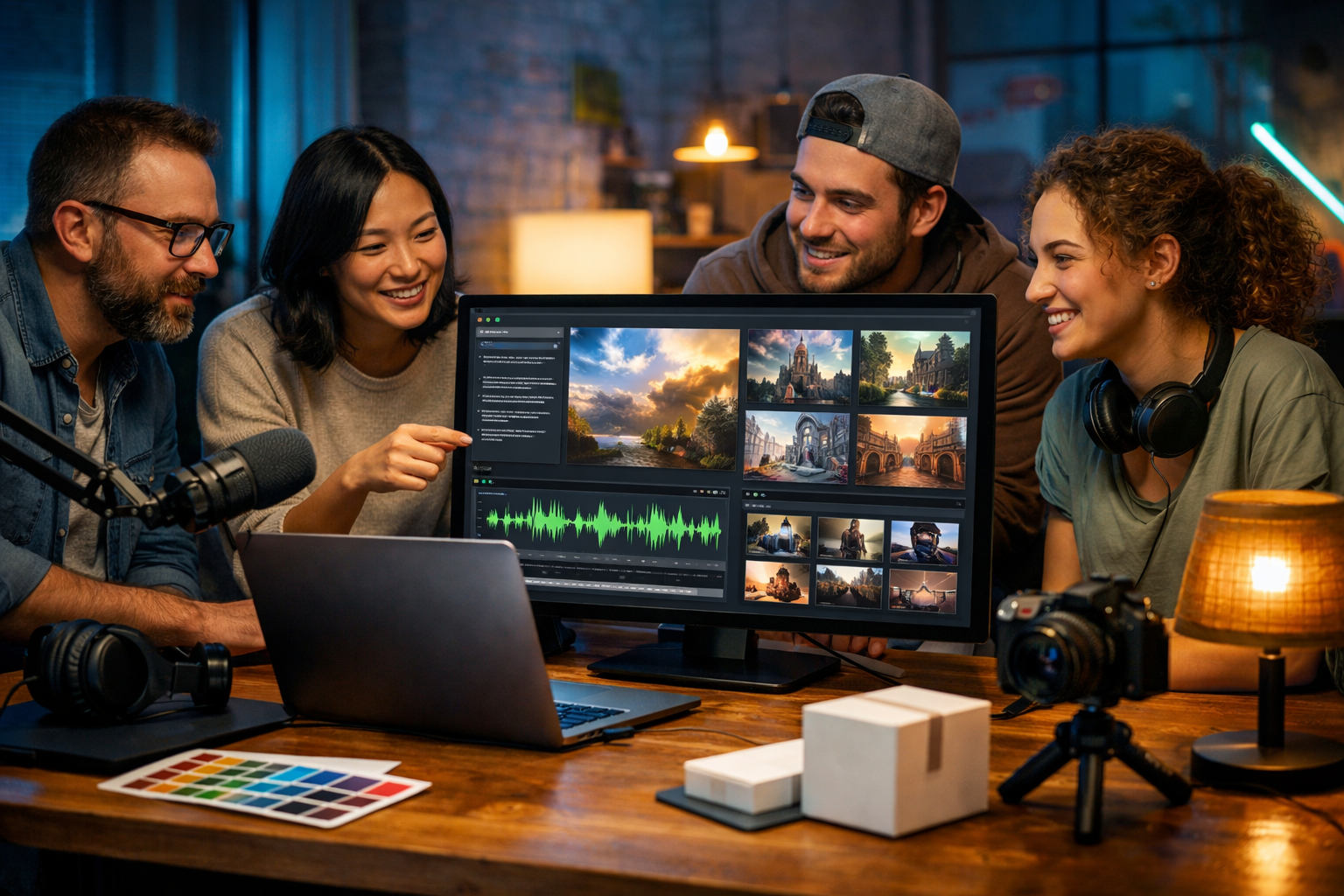
Generative AI has shifted from “write me a paragraph” novelty to a practical production layer for text, images, audio and video. The generative AI latest developments are less about one headline model release and more about workflows: multimodal creation, agent-like automation, faster media generation, and stronger safety controls. If you’re a startup, creator or small marketing team, the opportunity is clear—ship more content, in more formats, without hiring a full studio.
1) Multimodal AI is becoming the default
One of the biggest generative AI latest developments is the move from single-format tools (only text or only images) to multimodal systems that understand and produce multiple media types. Instead of juggling separate apps, teams increasingly expect a single prompt to influence copy, creative, narration and short-form video.
In practice, multimodal workflows look like this:
- A campaign brief becomes landing-page copy, ad variants and email sequences.
- The same brief generates brand-aligned visuals (banners, social graphics, product mockups).
- A short explainer video is assembled with a script, voice-over and supporting visuals.
This is exactly why an all-in-one platform matters. With our AI content tools, you can generate professional text, images, audio and video from prompts built around a single message—reducing handoffs and keeping your creative consistent.
Actionable tip: build “one brief, four outputs” prompts
Write one prompt that includes: target audience, offer, tone, constraints (word counts, aspect ratios, length), and your brand guardrails (do/don’t). Then request outputs in four sections: copy, images, audio, video. This saves time and keeps messaging coherent across channels.
2) Agent-like automation is replacing manual busywork
Another key area in generative AI latest developments is the rise of “agents”—systems that can plan, iterate and complete tasks with less step-by-step prompting. While the market uses the word “agent” loosely, the useful part for businesses is consistent: fewer repetitive edits and more structured workflows.
Common agent-style patterns now appearing in content teams include:
- Outline → draft → tighten → convert into multiple formats (LinkedIn post, email, landing page sections).
- Generate 20 ad hooks → select top 5 → produce variations by audience segment.
- SEO workflow: keyword intent → headings → FAQs → meta description → internal link suggestions.
If you’re small-team constrained, the win is not “AI writing everything”; it’s AI taking first pass on structure, variants and repurposing so your humans focus on judgement and brand.
Actionable tip: standardise your content checklists
Agents perform best with clear acceptance criteria. Create a checklist for each asset type (blog post, product page, video script). Include tone, reading level, compliance notes, and CTA rules. Then paste the checklist into your prompts so the model can self-check before outputting.
3) Video generation is improving fastest for marketing use cases
Among the generative AI latest developments, AI video is the one that changes marketing operations most dramatically. The technology is still evolving, but the trend is clear: easier generation of short clips, improved motion consistency, better scene control, and faster turnaround.
For small businesses, the most practical applications right now are:
- Product demos that combine generated visuals, captions and voice-over.
- Social reels: hook → 3 benefits → CTA, templated into repeatable formats.
- Explainer videos that start from a script and produce scenes to match.
Gen AI Last supports AI video generation alongside text, image and audio, letting you produce a complete “creative package” rather than a single asset.
Example workflow: a 30-second product reel
- Generate a punchy 80–110 word script (with a strong first line).
- Create 3–5 matching visuals (product hero, lifestyle shot, feature close-ups).
- Produce a voice-over and light background music.
- Assemble the video with scene timings (e.g., 4s hook, 18s benefits, 8s CTA).
You can build this in one platform and iterate quickly—especially useful when you’re A/B testing creatives weekly.
4) Image generation is moving from “pretty” to “on-brand”
Image tools used to be impressive but inconsistent. The generative AI latest developments in image generation focus on control: style consistency, better composition, and more predictable outputs for marketing assets. This matters because marketers don’t need random art—they need repeatable creative aligned with a brand system.
High-value image use cases for teams include:
- Campaign banners in consistent styles and colour palettes.
- Social graphics with a unified look across a series.
- Concept product photos and lifestyle scenes when photography is too costly.
Actionable tip: keep a “brand style block” in your prompt
Create a reusable snippet describing: colour palette, lighting mood, camera style (e.g., 50mm lens look), background type, and what to avoid (busy patterns, extra hands, distorted packaging). Reuse it for every campaign to improve consistency.
5) Audio is no longer an afterthought (voice, music, narration)
Audio has become a serious differentiator in the generative AI latest developments. Teams can now produce voice-overs and background music quickly, which makes short-form video and podcasts far more accessible. The biggest operational change is speed: you can test multiple narration styles without re-recording.
Practical ways small teams use AI audio include:
- Voice-over for product walkthroughs and tutorials.
- Narration for blog-to-audio repurposing.
- Background music for reels and explainer videos.
Actionable tip: write for the ear, not the page
Voice scripts need shorter sentences, fewer parentheses, and more signposting (“First… Next… Finally…”). When you generate a blog post, ask for a second version as a 60–90 second spoken script with natural cadence.
6) “Smaller, faster, cheaper” models are reshaping adoption
A less flashy but important part of generative AI latest developments is efficiency. Many organisations are prioritising models and workflows that run faster, cost less and still deliver quality. For startups, this is the difference between occasional experiments and daily use.
This shift is also why pricing matters. Gen AI Last keeps full access to text, image, audio and video generation affordable, starting at view pricing from $10/month. For small teams, predictable costs make it easier to standardise AI in the content process rather than treating it as a one-off tool.
7) Retrieval and “grounded” generation is becoming a baseline expectation
Businesses increasingly want outputs that reflect their real-world facts: product specs, policies, pricing, and brand terminology. One of the most practical generative AI latest developments is the push towards grounded generation—connecting outputs to reliable reference material (documents, pages, structured notes) and making it easier to avoid hallucinations.
Even without complex integrations, you can get many benefits by grounding your prompts yourself:
- Paste the exact product features, dimensions, and warranty terms into the prompt.
- Provide approved messaging (“we never say X; we always say Y”).
- Ask the model to list assumptions and flag missing data before drafting.
Actionable tip: enforce a “no new facts” rule
Add a line to your prompt: “Use only the facts in the reference section; if something is missing, write [NEEDS CONFIRMATION].” This single constraint dramatically reduces incorrect claims in product and compliance-heavy content.
8) Personalisation at scale is shifting from gimmick to growth lever
Another theme in generative AI latest developments is scalable personalisation—creating multiple versions of the same message for different audiences, stages and channels. This works because modern distribution is fragmented: what converts on email may not convert on TikTok; what resonates with founders may not resonate with operations leads.
Useful personalisation patterns:
- One product, three personas: “budget-focused”, “performance-focused”, “risk-averse”.
- One offer, three funnel stages: awareness, consideration, decision.
- One blog post, five social hooks targeting different pain points.
Example prompt for persona variants
Ask for: (1) a core value proposition in one sentence, then (2) three rewrites, each optimised for a persona, including objections and proof points. Then generate matching creatives: one image concept per persona and one 15-second video script per persona.
9) Safety, provenance and compliance are becoming product requirements
As adoption grows, the generative AI latest developments include more emphasis on safety controls: reducing harmful outputs, respecting IP, and improving transparency about generated media. For businesses, the goal is simple—ship content confidently.
A practical compliance mindset for teams:
- Avoid generating content that imitates specific living artists, brand mascots or copyrighted characters.
- Add a human review step for regulated claims (health, finance, legal, children).
- Maintain a “source of truth” doc for product facts and approved messaging.
10) The real competitive edge: end-to-end content systems
The most important takeaway from generative AI latest developments is this: teams that win are building systems, not one-off prompts. A system is repeatable and measurable—turning insights into assets on a weekly cadence.
A simple end-to-end system you can implement in a day:
- Pick one audience problem to own (e.g., “how to choose X”).
- Produce one flagship blog post per week (SEO-first).
- Repurpose into: 5 social posts, 1 email, 1 short video, 3 images, 1 voice-over clip.
- Track performance (CTR, watch time, conversions) and iterate your prompts.
Because Gen AI Last combines text, image, audio and video generation, you can run this system without paying for multiple tools or switching contexts. If you want to trial the workflow quickly, start creating for free and build your first “one brief, many assets” campaign.
Practical examples: what to generate this week
Here are three concrete bundles you can generate using a single campaign brief.
Bundle A: SaaS feature launch
- Text: launch blog post, pricing-page section, 3-email sequence, 10 social posts.
- Images: product UI hero banner, 3 feature cards, 5 social graphics.
- Audio: 30-second voice-over for the demo video.
- Video: 45-second explainer with 3 scenes (problem, solution, proof).
Bundle B: E-commerce product page optimisation
- Text: product description variants (short, long, SEO), FAQs, review-response templates.
- Images: clean product hero concepts, lifestyle contexts, seasonal ad banners.
- Video: 15-second “3 benefits” reel and a 30-second how-to clip.
- Audio: upbeat background music for reels; warm narration for the how-to.
Bundle C: Local business lead generation
- Text: location landing page, Google Business Profile post copy, SMS follow-up templates.
- Images: before/after style creatives, service-in-action shots (photorealistic), offer banners.
- Video: short testimonial-style explainer (scripted), service walkthrough reel.
- Audio: friendly voice-over and subtle background music.
FAQ: generative AI latest developments
What’s the biggest change in generative AI right now?
The biggest change is operational: multimodal creation and agent-like workflows are turning AI into a production pipeline rather than a single tool for drafting text.
Is generative AI only useful for large companies?
No. Small teams often benefit most because AI reduces specialist bottlenecks (copywriting, design, voice-over, basic video). The key is having repeatable prompts and a clear review process.
How do I keep outputs accurate and on-brand?
Ground your prompts with approved facts and messaging, add a “no new facts” rule, and reuse a brand style block for both copy and images. Then review final assets like you would any contractor work.
Next steps: turn developments into daily execution
The generative AI latest developments are exciting, but the advantage goes to teams who translate them into consistent output: one brief, many assets, measured weekly. If you want a single, affordable place to generate text, images, audio and video, explore our AI content tools and view pricing from $10/month to start building a content system that ships.
Ready to Create with Generative AI?
Join thousands of creators using Gen AI Last to generate text, images, audio, and video — all from one platform. Start your 7-day free trial today.
Start Free — Try 7 DaysQuick Links
Create AI content from $10/month
View Plans