Generative AI Marketing Trends Reshaping Advertising in 2026
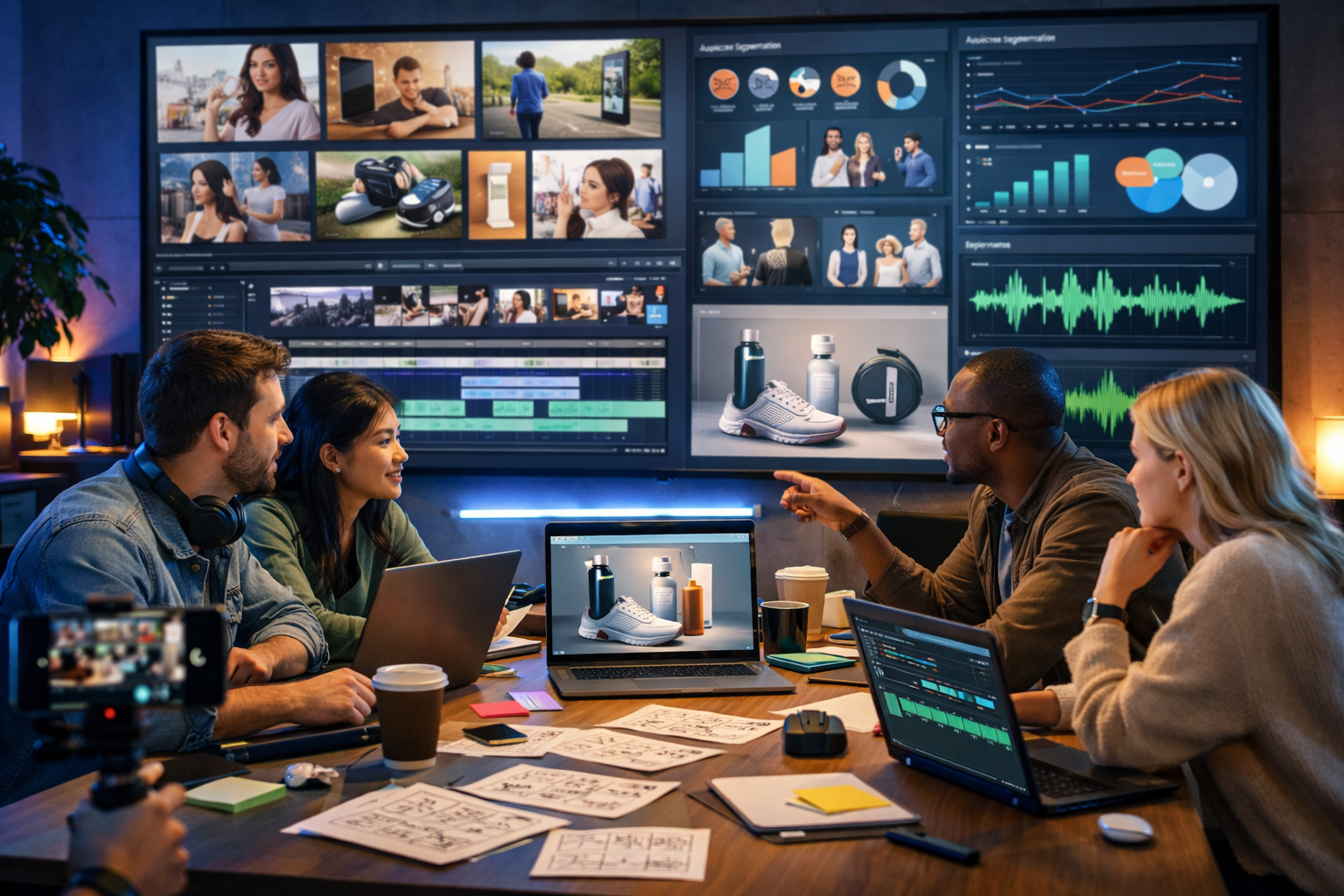
Generative AI is no longer a “nice-to-have” for marketing teams—it’s becoming the production engine behind modern advertising. In 2026, the brands winning attention won’t just run more ads; they’ll run smarter creatives that adapt to audiences, channels and moments in near real time. This article breaks down the generative AI marketing trends reshaping advertising in 2026, with practical ways to apply them using an all-in-one platform like Gen AI Last.
Why 2026 is a turning point for generative AI in advertising
From 2023–2025, many teams used AI primarily for copy drafts and quick images. In 2026, the shift is structural: marketers are rebuilding workflows so AI can generate, test and refine multi-format campaigns (text, image, video and audio) at speed—without sacrificing brand consistency.
The competitive advantage now comes from combining three capabilities:
- A strong creative strategy and clear brand guardrails (tone, visual style, claims, compliance rules).
- Fast multi-asset production (ads, landing content, email sequences, social posts, short-form videos, voice-overs).
- A feedback loop based on performance data and audience insights—turning results into improved prompts and new variants.
Gen AI Last supports this “full-funnel, multi-format” approach by letting you generate professional text, images, audio and video from simple prompts—starting from affordable plans that work for startups and small teams.
1) Hyper-personalised creative at scale (without exploding production costs)
The biggest practical change in 2026 is the expectation that ads will feel specific to the viewer: their intent, location, industry, and even the context of the platform. Generative AI makes it feasible to create dozens (or hundreds) of creative variants that still align with one brand.
What’s changing: teams are moving beyond “one hero creative” to a creative matrix: multiple hooks, angles, visuals, CTAs and formats mapped to different audience segments.
How to apply it:
- Define 3–5 core customer segments and the top objections for each.
- Create 5–10 hooks per segment (e.g., speed, cost, quality, status, risk reduction).
- Generate a set of matching images and short videos that visually communicate each hook.
- Rotate variants based on performance, not preference.
Example prompt (text): “Write 8 Meta ad primary texts for [product] targeting [segment], focusing on [objection]. Use a confident, friendly British tone. Include one clear CTA and keep under 125 characters.”
With our AI content tools, you can generate the copy, supporting social graphics, and a short video version of the same concept—so personalisation doesn’t require separate tools or specialist teams.
2) “Prompt-to-campaign” workflows replace ad-by-ad creation
In 2026, efficient teams don’t treat AI as a writing assistant—they treat it as a campaign system. Instead of making one ad at a time, they input a structured brief and output a bundle: ad copy, hero image set, short-form video scripts, voice-over lines and email follow-ups.
What to include in a structured campaign brief:
- Offer: what you’re selling, price point, guarantee, key differentiator.
- Audience: who it’s for, pain points, awareness level.
- Proof: testimonials, stats, demos, comparisons (ensure claims are verifiable).
- Brand voice: tone, banned phrases, compliance notes.
- Channels: Meta, TikTok, YouTube Shorts, email, landing page.
Actionable tip: Save your best-performing prompts as reusable templates. In 2026, prompt libraries are becoming a marketing asset—similar to brand guidelines.
3) Short-form AI video becomes the default ad format
Short-form video has been dominant for years, but generative AI is changing the economics. In 2026, brands can rapidly produce product demos, UGC-style explainers, and offer-led reels without relying on constant filming, editing and motion design.
What’s reshaping advertising: faster iteration. When creative fatigue hits, teams generate a new video concept the same day, rather than waiting a week for production.
Practical video angles to generate and test:
- Problem/solution: “If you struggle with X, here’s the faster way…”
- Before/after: results-focused, but compliant and honest.
- Feature demo: 3 key features in 15 seconds.
- Comparison: “Old way vs new way” format.
- Founder narrative: why the product exists.
Gen AI Last’s AI Video Generation helps you move from concept to usable video assets quickly, so you can keep pace with platform trends and testing cycles.
4) AI audio: voice-overs, narration and sonic branding at scale
Audio is quietly becoming a growth lever in 2026—especially for brands producing video ads, product walkthroughs, podcasts, and multi-language campaigns. Generative AI audio reduces the friction of making professional voice-overs and background music that matches the mood.
Where AI audio is reshaping ads:
- Consistent voice-over across dozens of short videos.
- Fast localisation (e.g., UK vs US phrasing, or other languages where appropriate).
- Narrated product demos and explainer videos without booking studio time.
Actionable tip: Create 2–3 “sonic moods” aligned with your brand (e.g., calm premium, energetic playful, minimal tech). Then keep your audio choices consistent across paid and organic content to build recognition.
5) Synthetic product photography and on-brand visual systems
In 2026, AI image generation is less about one-off novelty and more about building repeatable, on-brand visual systems: consistent lighting, backgrounds, composition, and product styling across campaigns.
What’s new: “infinite variations” are useful only if they are controlled. Brands are creating strict visual rules—then generating large batches that still look cohesive.
High-performing use cases:
- Seasonal refreshes (summer/winter scenes) without full reshoots.
- Platform-specific crops and layouts (feed, stories, banners).
- Concept testing: different contexts, props, and “use moments”.
Example prompt (image): “Photorealistic product shot of [product] on a kitchen counter at golden hour, soft natural shadows, shallow depth of field, lifestyle feel, no text, 16:9.”
6) Creative testing shifts from A/B to multivariate “always-on” experimentation
Traditional A/B tests are too slow for the creative volume AI enables. In 2026, high-performing teams run multivariate creative testing: multiple hooks, multiple visuals, multiple CTAs—constantly cycling winners and replacing fatigued variants.
How to run an “always-on” creative testing cadence:
- Weekly: launch 10–20 new creative variants across top audiences.
- After 48–72 hours: kill obvious losers and duplicate early winners.
- Bi-weekly: analyse themes (hooks, visuals, pacing, offers) rather than individual ads.
- Monthly: update your prompt templates based on learnings.
The key is to separate idea generation (AI can help massively) from decision-making (humans must judge relevance, accuracy, and brand impact).
7) AI-assisted creative strategy: positioning, messaging and offers
One of the most overlooked generative AI marketing trends reshaping advertising in 2026 is the use of AI earlier in the process: not just producing assets, but shaping the strategy—testing positioning statements, mapping objections, and generating angle ideas.
Practical ways to use AI for strategy (then validate with real data):
- Turn reviews and support tickets into a list of top pain points and phrasing customers actually use.
- Generate alternative positioning statements and tagline directions.
- Build an objection-handling library for ads, landing pages and email flows.
Actionable tip: Feed AI anonymised, representative inputs (reviews, FAQs, call notes) to keep outputs grounded in reality. Avoid inventing claims—especially in regulated niches.
8) Brand safety, compliance and “trust-first” creative
As AI output becomes more widespread, trust becomes a differentiator. In 2026, audiences and platforms are more sensitive to misleading claims, fake endorsements, and low-integrity content. The best teams build safeguards into their process.
Trust-first checklist for AI-generated advertising:
- Claims: only state what you can prove; keep evidence to hand.
- Testimonials: never fabricate; use real customer quotes with permission.
- Before/after: be cautious, especially for health/finance; follow local rules.
- Disclosure: follow platform policies for synthetic media when required.
- Brand voice: maintain consistency so AI doesn’t drift into generic “marketing speak”.
A practical approach is to maintain a simple “brand and compliance brief” that you paste into prompts each time: tone rules, do-not-say phrases, approved proof points, and required disclaimers.
9) The rise of small teams running full-funnel creative studios
In 2026, a lean team can produce what used to require multiple agencies: copywriting, design, video, and audio. That’s why AI is particularly transformative for startups and small marketing teams: it compresses production time and cost while expanding creative output.
Gen AI Last is designed for this reality: one platform for text, images, video and audio—so you’re not juggling subscriptions, tools, and exports for each asset type. If you want to see how accessible this can be, view pricing from $10/month.
A practical 2026 playbook: launch an AI-powered campaign in 60–90 minutes
Here’s a repeatable workflow you can use for a product, service, or lead magnet.
- Write a one-page brief (10 minutes): audience, offer, proof, objections, channels, tone.
- Generate copy variants (15 minutes): 10 hooks, 10 primary texts, 10 headlines, 5 CTAs. Keep lengths platform-appropriate.
- Generate image set (15 minutes): 8–12 visuals aligned to hooks (lifestyle, close-up, comparison, abstract background).
- Generate video scripts + videos (20–30 minutes): 5 short-form concepts with different openings; add a clear CTA.
- Generate voice-over / audio (10 minutes): pick a consistent tone and pace; create 2 alternates (calm vs energetic).
- QA and compliance pass (10 minutes): check claims, spelling, brand voice, and any required disclosures.
If you’re starting from scratch, start creating for free and build a small set of templates: one for offers, one for new product launches, and one for retargeting ads.
What to measure in 2026 (beyond clicks)
As generative AI increases creative volume, measurement must become sharper. Track metrics that reveal creative quality and audience fit, not just reach.
- Hook rate: 1–3 second video retention or thumb-stop indicators.
- Message match: does the landing page continue the same promise and language?
- Conversion quality: lead-to-sale rate, refunds, churn, repeat purchase.
- Creative fatigue: frequency vs CPA/ROAS trends by creative cluster.
Actionable tip: Tag each creative with the “angle” it represents (speed, savings, premium, simplicity, proof). After two weeks, you’ll know which angles work—not just which ads.
Common mistakes to avoid when adopting generative AI for advertising
- Publishing generic output: AI drafts should be shaped with brand voice, proof, and specificity.
- Ignoring creative strategy: more content doesn’t fix a weak offer or unclear positioning.
- Over-automating trust: keep human review for claims, compliance, and sensitive topics.
- Not building a prompt library: without templates, you’ll recreate your process each time.
- Testing too little: AI enables iteration—use it to learn quickly, not to “set and forget”.
Final thoughts: the teams that win in 2026
The generative ai marketing trends reshaping advertising in 2026 point to one outcome: advertising becomes more iterative, more personalised, and more multi-format. The winners will be the teams that combine creative judgement with fast, disciplined production—building systems, not just assets.
If you want to run this approach without stitching together multiple tools, explore our AI content tools and build a repeatable workflow for text, images, video, and audio—then scale as your results improve.
Ready to Create with Generative AI?
Join thousands of creators using Gen AI Last to generate text, images, audio, and video — all from one platform. Start your 7-day free trial today.
Start Free — Try 7 DaysQuick Links
Create AI content from $10/month
View Plans