Generative AI Marketing Trends Reshaping Advertising in 2026
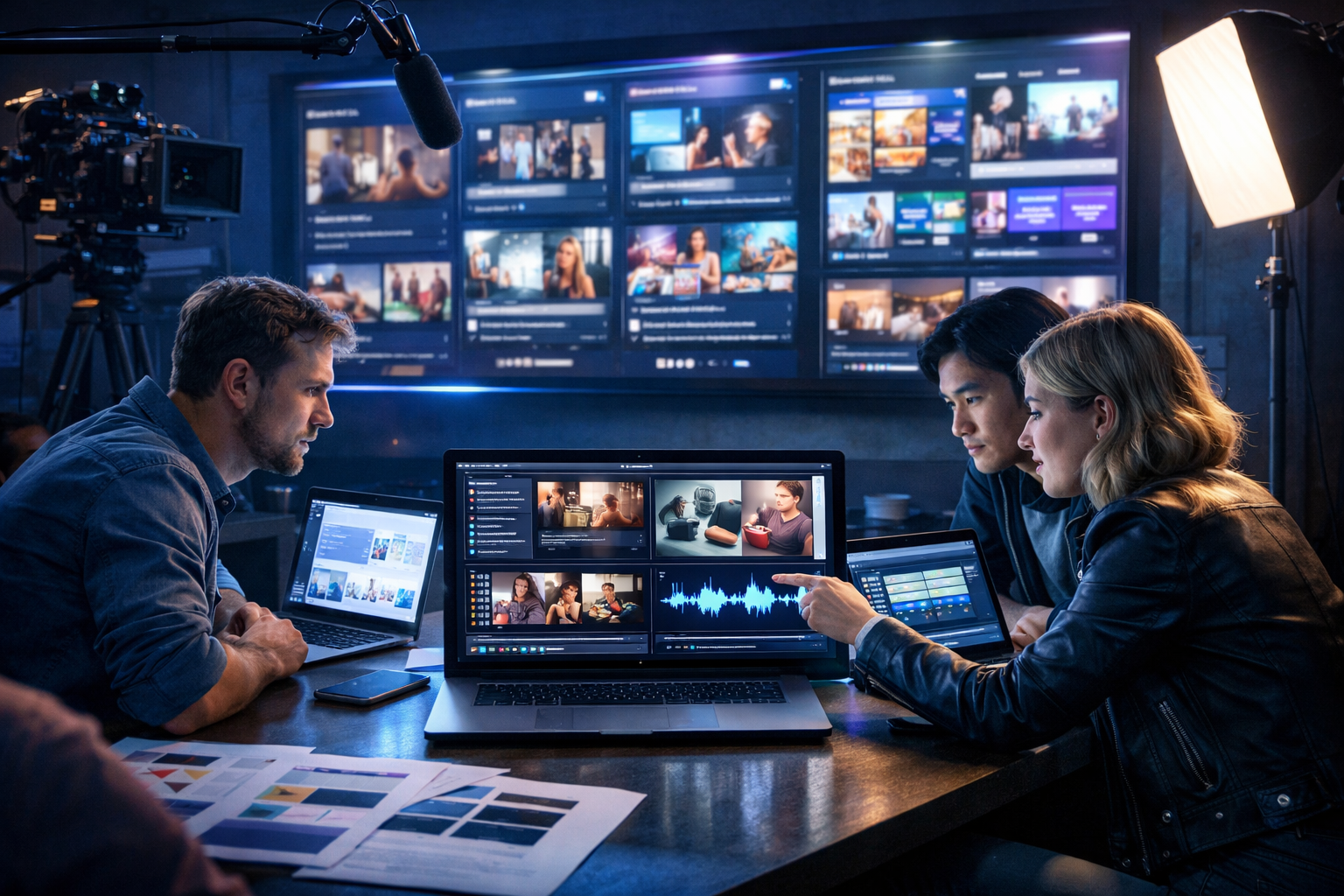
Advertising in 2026 is being reshaped by a simple truth: the bottleneck is no longer creativity, it’s coordination. Generative AI can now produce high-quality copy, visuals, voice, and video in minutes—so the winners are the teams who can align strategy, brand, compliance, and measurement while shipping more experiments than competitors.
In this guide, we’ll unpack the most important generative AI marketing trends reshaping advertising in 2026, what they mean for marketers day-to-day, and how to apply them without damaging trust. You’ll also see practical workflows you can run today using our AI content tools—text, image, audio, and video generation in one platform—so small teams can operate like an agency.
1) Multimodal campaigns become the default (not a nice-to-have)
In 2026, campaigns are rarely “copy-first” or “video-first”. They’re multimodal by design: a concept is expressed as a landing page, paid social variants, a short-form reel, a product demo, voice-over, and a set of images sized for each channel. Generative AI makes this feasible at startup budgets.
What changes: teams plan creative as a system of assets rather than single hero pieces. Briefs include channel outputs and formats from the start, and the creative process becomes a pipeline.
- Creative direction defines the concept, audience promise, and proof points.
- Asset production generates channel-specific executions (copy, images, video, voice).
- Iteration produces controlled variants for testing.
How to apply it with Gen AI Last: start with AI text to generate a campaign spine (value prop, key messages, objections, CTA). Then produce matching images (product scene variations), short videos (explainer or demo cuts), and audio (voice-over in a consistent tone). Because everything is generated from prompts, you can keep the concept coherent while adapting to each channel.
2) Personalisation shifts from “Hi {FirstName}” to situational messaging
Personalisation in 2026 is less about identity-based targeting and more about context: the job-to-be-done, current intent, device, placement, and stage in the funnel. With privacy constraints and cookie limitations, brands are building creative that adapts to situations rather than individuals.
Examples of situational personalisation:
- Different hooks for “research mode” vs “ready to buy”.
- Messaging variations for “small team” vs “enterprise stakeholder”.
- Different creative for mobile feed, desktop search, and connected TV.
Actionable workflow: define 6–10 high-impact contexts (not personas). For each context, generate three ad angles (pain, gain, proof) and two CTAs. With AI text generation you can produce these quickly, then convert the best-performing angles into matching image and video creatives.
3) Synthetic production replaces expensive shoots for 80% of assets
Product photography and video production are still valuable—but in 2026, many brands reserve live shoots for flagship brand moments. Day-to-day paid social assets, seasonal refreshes, and A/B variations increasingly come from synthetic production: AI-generated images, AI-assisted edits, and prompt-driven short video creation.
Where synthetic production excels:
- Testing product-in-context scenes (kitchen, gym bag, desk setup).
- Generating multiple colourways or packaging variants for ads.
- Creating rapid seasonal assets (summer, back-to-school, Black Friday).
Risk to manage: realism can backfire if imagery implies features you don’t have, or shows accessories not included. Build a review step: “Is this accurate?” before anything goes live.
If you’re a lean team, this is where Gen AI Last stands out: you can generate product visuals, banners, and social graphics with AI image generation, then produce short demo-style clips with AI video generation—without stitching together multiple tools. If you want to see how affordable that can be, view pricing from $10/month.
4) Creative testing becomes continuous, not campaign-based
A major generative AI marketing trend reshaping advertising in 2026 is the shift from “launch and leave” to always-on creative testing. When you can generate 50 variants in an afternoon, you stop treating creative like a precious artefact and start treating it like a performance lever.
What to test (in order of impact):
- Offer framing: free trial vs money-back guarantee vs “from £X/month”.
- Hook: problem statement, contrarian claim, social proof, or outcome promise.
- Proof: stats, testimonials, demos, before/after, comparison tables.
- Format: UGC-style reel, screen-recorded walkthrough, static carousel.
Practical advice: don’t test everything at once. Keep one variable constant (e.g., offer) while testing hooks. Then lock the winner and move to proof or format.
5) Brand voice becomes a system you can prompt—and enforce
In 2026, the brands that win with AI aren’t the ones generating the most content; they’re the ones maintaining a consistent brand voice across channels and creators. Generative AI makes consistency possible if you treat your voice like a set of rules rather than a vibe.
Create a “voice pack” marketers can reuse:
- Tone sliders: confident, practical, friendly, not salesy.
- Do/Don’t list: avoid hype, avoid vague superlatives, use specific proof.
- Approved phrases and banned phrases.
- Reading level guidance and formatting rules.
Example prompt snippet: “Write in British English. Be specific and evidence-led. Avoid buzzwords. Use short paragraphs. Include one clear CTA.” Then add product facts and audience context. This turns your AI output into something your brand can actually ship.
6) Search ads, SEO, and social creative converge around intent clusters
The old split—SEO team writes articles, paid team writes ads, social team posts—creates inconsistent messaging and wasted learning. In 2026, high-performing teams build intent clusters (problem → solution → proof → comparison) and adapt them across every channel.
How to build an intent cluster:
- Core query: the keyword theme you want to own.
- Sub-intents: “how it works”, “best tools”, “pricing”, “templates”, “examples”.
- Assets: one pillar page, several supporting posts, ads matching each sub-intent, and social clips that answer the same questions.
With AI text generation, you can draft the pillar article, supporting FAQs, and ad variants while keeping claims consistent. Then use AI video to turn the top FAQs into short reels, and AI audio for narration—ideal for teams who want omnichannel output without hiring a full production crew.
7) The “creative supply chain” becomes a competitive advantage
Generative AI introduces a new operational challenge: not “Can we create?” but “Can we create reliably?” In 2026, marketing operations increasingly looks like product ops—templates, version control, approvals, and performance feedback loops.
Build a lightweight creative supply chain:
- Brief template (audience, context, offer, proof, CTA, restrictions).
- Prompt library for common assets (landing hero copy, 15-second script, carousel captions).
- Review checklist (accuracy, compliance, brand voice, accessibility).
- Post-launch learning documented as “what won and why”.
If you’re using an all-in-one platform like Gen AI Last, your team can keep production consistent: generate copy, then immediately generate matching visuals and videos using the same creative direction, reducing the “handoff friction” that kills speed.
8) Voice and audio return as performance channels
Audio isn’t just for podcasts anymore. In 2026, short-form audio snippets, narrated explainers, and voice-overs for reels and product demos become standard. AI audio generation lowers the barrier: you can create narration quickly, test different tones, and localise without booking studio time.
High-ROI audio use cases:
- Voice-over for product demos and screen recordings (clear, paced, consistent).
- Podcast-style “founder’s note” clips repurposed into social video with subtitles.
- Background music beds for short ads (be careful with licensing and platform rules).
With Gen AI Last, you can generate both the script (AI text) and the narration (AI audio), then combine it with AI video output—useful when you need consistent weekly publishing without a dedicated editor.
9) Trust, disclosure, and compliance become part of creative design
As generative AI content floods feeds, trust becomes a differentiator. Regulators and platforms continue to evolve rules around synthetic media, claims, and targeting. In 2026, smart marketers design for compliance early—before assets are scaled.
Practical safeguards to adopt:
- Claims discipline: require a source for any statistic or “#1” statement.
- Synthetic media policy: define when AI-generated people/voices are allowed.
- Review gates: legal/compliance review for regulated industries (finance, health).
- Accessibility: captions, contrast, readable typography, audio clarity.
AI makes output easy; governance makes output safe. Put the policy into your prompts and checklists so it becomes routine rather than a last-minute panic.
10) Measurement adapts: modelled performance and creative-level insights
Attribution remains messy in 2026, but the most effective teams don’t wait for perfect tracking. They combine platform signals, incrementality tests where possible, and disciplined creative experimentation to learn what truly moves results.
How to measure in an AI-heavy creative world:
- Creative scoring: tag each asset by hook, proof type, format, and offer so winners are explainable.
- Holdout tests: where feasible, run geo or audience holdouts to estimate incrementality.
- Creative fatigue tracking: plan refresh cycles and variant pools.
The key shift is organisational: creative is now a measurable input, not an untrackable art project. Generative AI helps because you can generate enough variants to see clear patterns, not false positives.
A practical 7-day plan to use these trends (even with a small team)
If you want to operationalise the generative AI marketing trends reshaping advertising in 2026, use this one-week sprint as a starting point.
- Day 1: Define contexts (6–10 situations) and choose one offer to test.
- Day 2: Generate messaging—3 hooks per context, plus proof and CTA variations using AI text.
- Day 3: Generate visuals—6–12 image variants aligned to the best hooks using AI image generation.
- Day 4: Generate videos—3 short scripts, then produce reels/explainers using AI video generation.
- Day 5: Add audio—voice-over and optional background music using AI audio generation.
- Day 6: Launch controlled tests—one variable at a time (hook first).
- Day 7: Document learnings—tag winners, rewrite your prompt library, and plan the next batch.
You can run the entire sprint inside our AI content tools instead of juggling separate subscriptions and workflows. If you haven’t tried it yet, start creating for free and build your first campaign asset set in a single session.
Common mistakes to avoid in 2026
Generative AI speeds up production, but it also amplifies mistakes. Avoid these pitfalls:
- Publishing unverified claims: AI can invent details—treat facts as inputs, not outputs.
- Too many variants, no learning: if you don’t tag and track, you’ll generate noise.
- Inconsistent brand voice: prompt with a voice pack and enforce review standards.
- Generic creative: the easiest AI output looks like everyone else’s. Anchor prompts in real customer language, real objections, and real proof.
- Forgetting accessibility: captions, contrast, and clear pacing matter more as content volume rises.
FAQ: generative AI marketing in 2026
Will generative AI replace advertising agencies?
It will change what agencies sell. Execution becomes cheaper; strategy, brand stewardship, and performance creativity become more valuable. Many brands will keep agencies for high-stakes campaigns while producing day-to-day assets in-house with AI.
How do we keep AI content on-brand?
Codify voice rules (do/don’t, tone, formatting), provide product facts, and use a review checklist. Save your best-performing prompts so outputs stay consistent across team members and channels.
What’s the fastest way to start?
Pick one product and one channel, then generate a controlled set of variants: 10 hooks, 5 images, 3 short videos, and one voice-over style. Measure performance, then scale what wins.
Final thoughts: speed matters, but trust wins
The generative AI marketing trends reshaping advertising in 2026 point to one outcome: marketers can produce more, faster, and across more formats than ever before. But the brands that win will be the ones who combine that speed with governance—clear claims, consistent voice, and measurable learning loops.
If you want an affordable way to run multimodal production—copy, images, audio, and video—without stitching together multiple tools, explore Gen AI Last. You can view pricing from $10/month and build a modern creative pipeline that’s realistic for startups and small teams.
Ready to Create with Generative AI?
Join thousands of creators using Gen AI Last to generate text, images, audio, and video — all from one platform. Start your 7-day free trial today.
Start Free — Try 7 DaysQuick Links
Create AI content from $10/month
View Plans