Multimodal AI Explained: Text, Image, Audio, Video
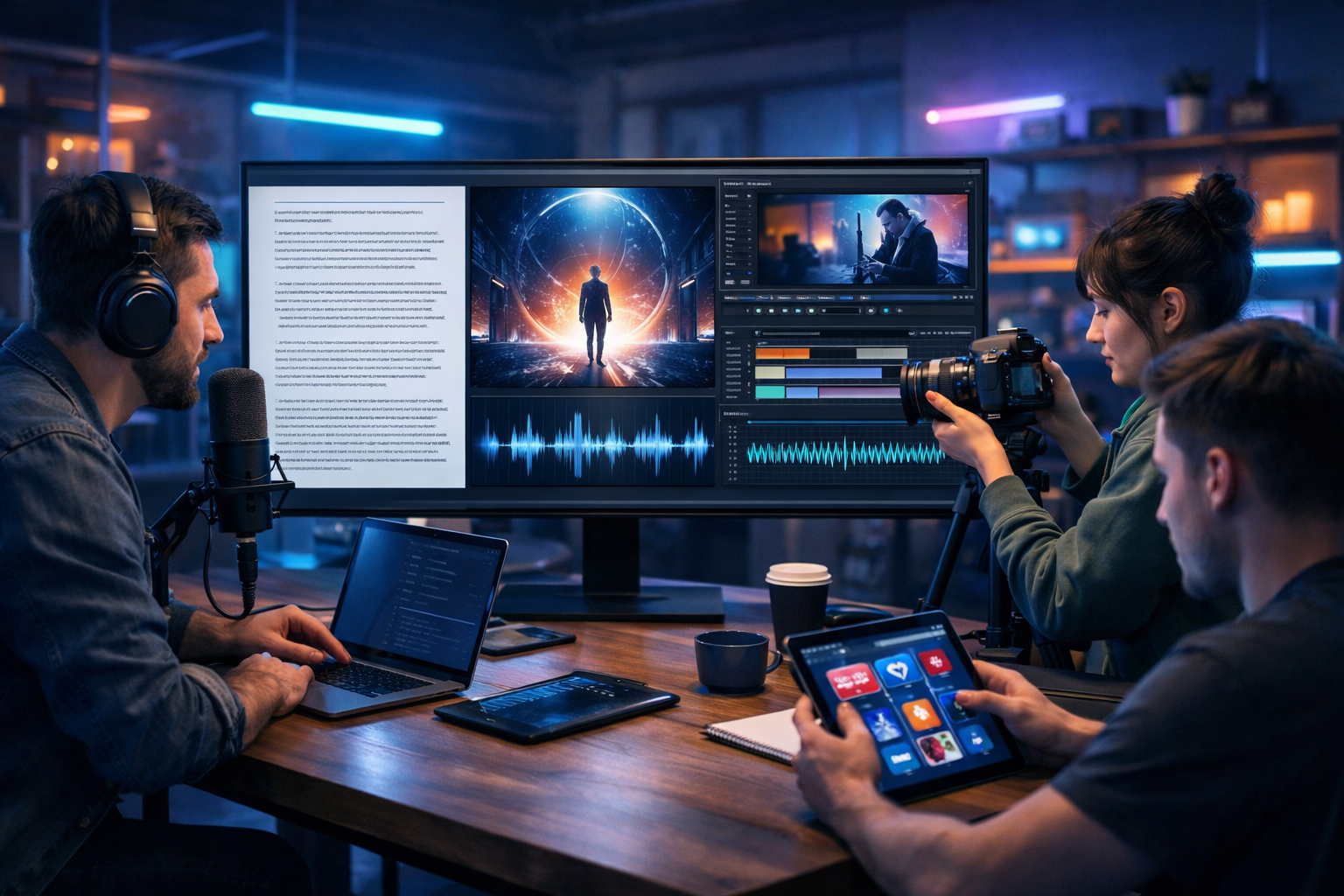
Multimodal AI is transforming how we create and consume digital content. Instead of handling text, images, audio and video as separate tasks, multimodal systems combine them into a single intelligent workflow. For businesses, marketers and creators, this means faster production, greater consistency and entirely new creative possibilities.
If you have searched for “multimodal AI explained text image audio video”, you are likely trying to understand how these different formats connect. In this guide, we break down what multimodal AI is, how it works, why it matters, and how organisations of any size can use it to create professional content at scale.
What Is Multimodal AI?
Multimodal AI refers to artificial intelligence systems that can process, understand and generate multiple types of data at the same time. These data types, or “modalities”, typically include:
- Text (articles, emails, captions, scripts)
- Images (photographs, graphics, illustrations)
- Audio (voice-overs, music, sound effects)
- Video (explainer videos, social reels, product demos)
Traditional AI tools often specialise in just one of these. A text model writes blog posts. An image generator creates visuals. A speech model produces audio. Multimodal AI brings these capabilities together so that one system can understand and generate content across formats in a coordinated way.
For example, you could input a short product description and receive:
- A long-form SEO blog article
- Matching product images
- A narrated promotional video
- Audio snippets for social media
All aligned in tone, message and branding.
How Multimodal AI Works
At a high level, multimodal AI systems are trained on vast datasets that include combinations of text, images, audio and video. They learn patterns not just within each format, but also across formats.
1. Shared Representations
Modern AI models convert different types of content into mathematical representations (often called embeddings). A picture of a dog, the word “dog”, a barking sound and a video of a dog running can all be mapped into related positions within a shared representation space.
This allows the model to understand that these different inputs describe the same concept, even though they appear in different forms.
2. Cross-Modal Learning
By training on paired data (such as images with captions, videos with transcripts, or audio with subtitles), multimodal AI learns relationships between modalities. For instance:
- How written descriptions translate into visual elements
- How scripts convert into spoken narration
- How visual scenes correspond to sound effects
3. Unified Generation
When you provide a prompt, the system can generate coordinated outputs. For example, a single prompt such as “Create a launch campaign for a sustainable water bottle” could produce:
- A persuasive blog post
- Instagram-ready product images
- A 30-second promotional video
- A professional voice-over
This integrated capability is what makes multimodal AI so powerful for modern content creation.
Why Multimodal AI Matters for Businesses
Digital marketing is no longer text-only. Audiences expect engaging visuals, short-form video, podcasts and interactive content. Managing these formats separately can be expensive and time-consuming.
Multimodal AI solves several critical challenges:
Consistency Across Channels
Brand voice often becomes diluted when different teams handle blogs, social posts, videos and podcasts independently. A multimodal system ensures consistent tone, messaging and visual style across all outputs.
Speed and Efficiency
Instead of commissioning separate writers, designers, videographers and voice actors, businesses can generate high-quality drafts instantly. This drastically reduces production cycles.
Cost Control
For startups and small teams, hiring specialists for every format is unrealistic. Platforms like our AI content tools bring text, image, audio and video generation together in one affordable solution.
Creative Experimentation
Want to test three versions of a video script, five visual styles and two voice-over tones? Multimodal AI enables rapid experimentation without ballooning costs.
Practical Examples of Multimodal AI in Action
1. E-commerce Product Launch
Imagine launching a new skincare product. With multimodal AI, you could:
- Generate SEO-optimised product descriptions
- Create high-quality product images and lifestyle visuals
- Produce a short explainer video for social media
- Add a professional voice-over describing benefits
All assets would align in tone and messaging, making your campaign cohesive and professional.
2. Educational Content Creation
A training company could input a course outline and receive:
- Structured lesson scripts
- Slide-ready visuals and diagrams
- Narrated video modules
- Downloadable audio summaries
This dramatically accelerates course production.
3. Social Media Campaigns
For a small business, maintaining an active presence on multiple platforms can be overwhelming. Multimodal AI can transform one core idea into:
- LinkedIn articles
- Instagram graphics
- TikTok-style short videos
- Podcast-style audio clips
This unified approach ensures efficiency without sacrificing quality.
How Gen AI Last Delivers Multimodal AI
Gen AI Last is built around the idea that content creation should not require multiple disconnected tools. Instead, it provides a single platform for:
- AI Text Generation: blog posts, product descriptions, email campaigns and social copy
- AI Image Generation: marketing visuals, product photos, banners and social graphics
- AI Video Generation: promotional videos, demos and explainers
- AI Audio Generation: voice-overs, narration, podcast audio and background music
Because all these features exist within one ecosystem, users can move seamlessly from script to image to video to audio without switching platforms.
Even better, you can view pricing from $10/month, making professional-grade multimodal AI accessible to startups and small teams.
Actionable Tips for Using Multimodal AI Effectively
Start With a Clear Core Message
Define your main objective before generating assets. Are you educating, selling or building brand awareness? A strong core message ensures every modality aligns.
Use Structured Prompts
Instead of writing “Create marketing content”, try:
- Target audience
- Tone of voice
- Platform (e.g. Instagram, YouTube, email)
- Desired outcome
This produces more accurate and usable results.
Repurpose Intelligently
Turn a long-form article into a script. Convert the script into a video. Extract audio for a podcast. Generate supporting images for social posts. Multimodal AI thrives on repurposing.
Review and Refine
AI accelerates creation, but human oversight ensures brand accuracy and compliance. Always review outputs before publishing.
The Future of Multimodal AI
As models improve, we can expect deeper integration between modalities. Imagine real-time video generation that adapts to spoken instructions, or interactive marketing campaigns that personalise text, visuals and audio for each viewer.
Businesses that adopt multimodal AI early will gain a competitive advantage through faster experimentation, richer storytelling and scalable content operations.
Getting Started Today
You do not need a large budget or technical team to leverage multimodal AI. Platforms like Gen AI Last make advanced capabilities accessible in one streamlined dashboard.
If you want to experience how text, image, audio and video generation work together, you can start creating for free and explore the full multimodal workflow yourself.
Multimodal AI is not just a technical trend. It represents a fundamental shift in how content is created, distributed and experienced. By understanding and applying it strategically, businesses can produce more engaging content, reach wider audiences and operate with greater efficiency than ever before.
Now that multimodal AI is explained across text, image, audio and video, the next step is simple: put it into practice.
Ready to Create with Generative AI?
Join thousands of creators using Gen AI Last to generate text, images, audio, and video — all from one platform. Start your 7-day free trial today.
Start Free — Try 7 DaysQuick Links
Create AI content from $10/month
View Plans